





Listen instead on your Monday Morning Drive:
A client of mine told me a few weeks back, “When you come visit us, you need to sit in on our production meeting.” Sure. How long is the meeting?
“About three hours.”
I wanted to throw up.
No event production company on the planet needs three hours of meetings every week to plan its work. I’ve sat through plenty of those meetings, and the patterns repeat themselves.
Redundant updates from the same people. Hijacked agendas. Circular conversations that end with no decision. A room full of people waiting on permission to do their jobs, because nobody told them it’s okay to start until “after the production meeting.”
Operations sets the priorities, and the production meeting is where the priorities get applied. Or buried.
Your Production Meeting Is Two Meetings
The first meeting is the technical directors’ meeting. Project managers, technical directors, and production managers want to talk about their individual shows. Where the screen goes, how the LED panels stack, whether they need to bring in an outside expert, what gets sub-rented. That’s a job-by-job conversation, and it’s important.
The second meeting is the planning meeting. Cross-job. What does the calendar look like? Where are our shared resources going? Which trucks carry which loads? Who is staffed on what? The planning meeting is where the company allocates its limited resources across the jobs that need them.
Most companies smash the two meetings together and call the whole agenda the production meeting.
That’s why it takes three hours. Half the room is talking about job-specific work that the other half doesn’t need to hear. The TDs are answering questions that needed to be answered before the meeting started. Everybody else is waiting their turn.
That friction wastes the team’s time, and it costs you money.
The TDs Meet First
The technical directors’ meeting happens before the planning meeting. The TDs walk through every active job and answer the questions that affect anybody else.
Do we understand what’s being asked of us at this event? Are unusual technical hurdles in play that require a drawing, engineering, or testing? Do we need to talk to outside experts? Are specialty sub-rentals on the radar that need to be sourced now? Will we be short on any standard equipment in audio, video, lighting, or projection during the same window? Does the job need to be prepped early because the client’s lighting designer wants to walk through the order with the master electrician?
That’s the technical directors’ meeting. It’s about the job. It produces the answers that the planning meeting consumes. Defining the role cleanly is how you keep the right work in the right meeting.
Staffing, Gear Flow, Logistics
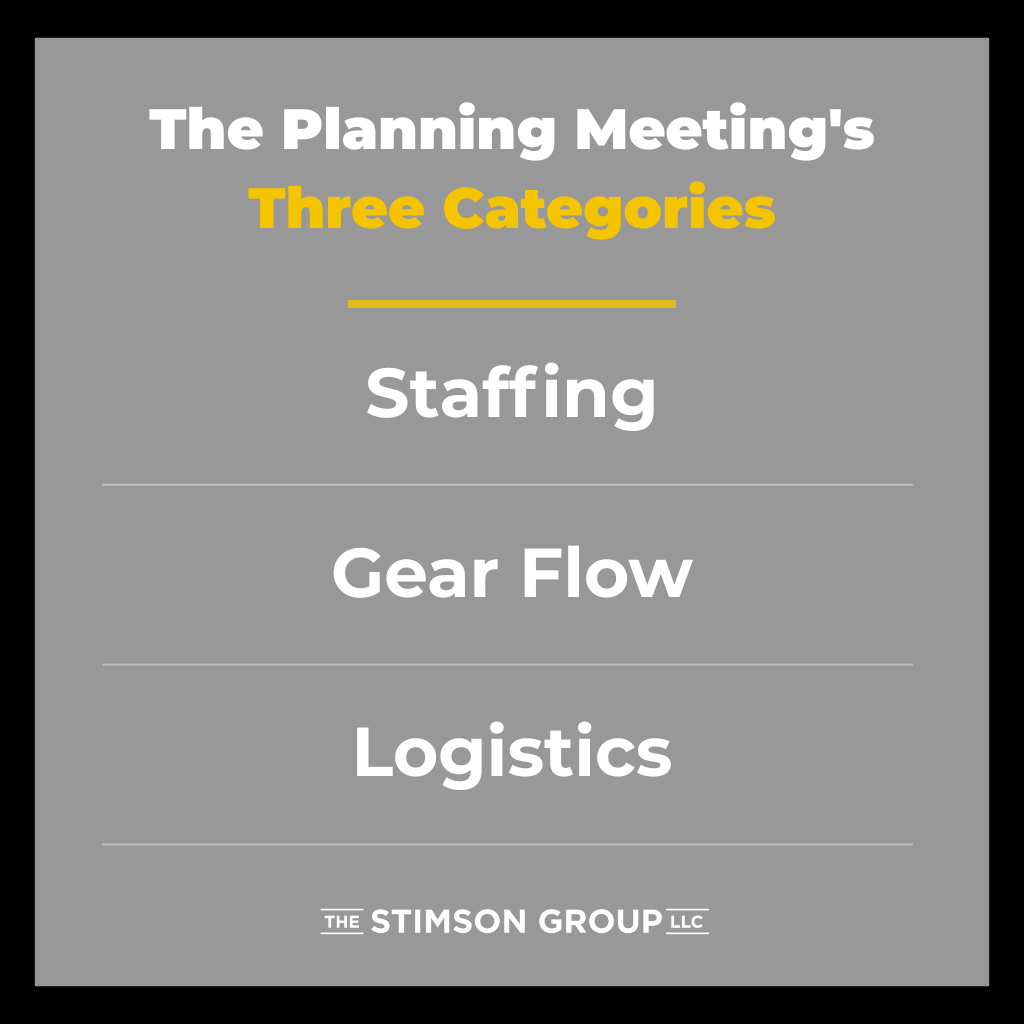
The planning meeting only covers three categories: staffing, gear flow, and logistics.
Staffing first. Are the imminent jobs in the next six weeks 100% staffed? Are we staffing key positions on jobs three and six months out? Are we staffing the talent we can’t substitute on jobs a year from now?
Gear flow next. We have two jobs that both need a stage, and we own one stage. Where does our stage go? Where do we sub-rent? Audio from this show comes from the warehouse. Lighting from another show comes from a sub-rental. Video from a third show is rolling off a job that ends two days before this one starts.
Logistics last. Which truck is going where, and what is it carrying? Which jobs sit close enough on the calendar that we can stack them on the same load? Building a scalable operation starts with the logistics decisions you make in this meeting.
Pre-Vet New Orders
A new order doesn’t show up at the planning meeting cold. The TDs pre-vetted it on their day. They walked through what was being asked, identified the technical hurdles, called in the outside experts, scoped the specialty sub-rentals, and put any short-supply equipment on the radar.
By the time the order hits planning, the question is simpler. What does this job need from the cross-job calendar? Where does the gear come from? Who is on the crew? When does it prep, and which warehouse cycle does that fit into?
If somebody walks into planning still asking job-specific questions, the TD meeting didn’t do its work. Send the job back. Run the TD pass. Bring it to the next planning meeting with the answers in hand. Build around the right work first, and the meetings shorten themselves.
The Magic Question: “What Changed?”
Once a job is in the plan, the only question worth asking is:
“What changed?”
Any updates to crew or equipment needs that materially affect the current plan for this job? No? Move on. Yes? Note the update, hand the action item to the right person, and move on.
That’s what compresses a three-hour meeting to 15 minutes.
The first time you run a job through planning, the conversation takes time. The crew is staffed, the gear is flowed, and the logistics are sketched. After that, the job is on autopilot in the meeting agenda. You’re scanning the list, checking each one, noting the changes.
That kind of disciplined cadence separates a company that runs the calendar from a company that the calendar runs.
Action Happens After the Meeting
Most production meetings turn into work sessions. The sub-rental person makes calls. The staffer texts the crew. The warehouse manager opens the inventory system to check availability.
That’s the wrong shape. The meeting transmits information. The work happens after the meeting, at desks, on phones, with the right systems open. Talking in the room doesn’t move the calls. Calling moves the calls.
If the person leading the meeting opens the agenda and asks, “What’s the update on the open video director position?” the right answer is short:
“Waiting on a callback from so-and-so.”
“Awesome. Great. Let’s move on. If the callback doesn’t come by the end of the day, escalate to me.”
Meeting time is for synchronizing. Action time is everywhere else. Hire the team that acts without needing the meeting to do it for them.
Stack Jobs, Stack Trucks
Here’s the gold the planning meeting unlocks when you run it cross-job. The job in Tennessee and the job in Atlanta sit two days apart on the calendar. The truck heading to Tennessee can detour through Atlanta on the way back. Two jobs covered with one round trip.
The same logic applies to gear. Audio from a show that ends Friday in Dallas can roll into a show that starts Monday in Houston. Lighting from a show that wraps in San Diego can ship straight to a show in Los Angeles instead of returning to the warehouse first.
Anytime you can send a truck out and cover two or three jobs before bringing it back, you make more money. Logistics costs spread across multiple revenue events. Sub-rental needs drop because the gear is already where the next job is.
The planning meeting is where these connections get spotted, and they get spotted only when you’re looking at every job at the same time. Cross-job thinking is what scalable companies do every week.
Look Three to Six Months Out
If your planning meeting only looks at the next two weeks, you’re already late on the hires that matter most. The good freelancers fill their calendars early. The best sub-rentals get reserved early. The first driver from the trucking company goes to whoever called first.
Plan three to six months out by default. Twelve months out for key positions on jobs you’re confident about. Even longer for talent you can’t substitute. The further ahead you look, the cheaper, calmer, and better-staffed every show becomes.
When the next two weeks are quiet, don’t cut the planning meeting short. Shift the lens. Spend that meeting on the calendar three months from now, six months from now, a year from now.
Run the Meeting Worth Having
If you only get one team meeting a week, this is the one to have.
Run the TD meeting first. Pre-vet new orders. Bring resolved questions into the planning meeting. Cover staffing, gear flow, and logistics across all jobs at the same time.
Ask “What changed?” on the jobs that are already in the plan. Note the action items. Send people back to their desks to do the work.
When you feel too busy, that’s a you problem, not a workload problem. The work is what it is. The way you run the meeting decides whether you stay calm or drown. Building the team around the cadence is how you stop drowning for good.
Make this meeting worth your while. Everybody will want to come. You’ll have it on the weeks when you don’t feel busy, and it’ll just be shorter.
And who doesn’t want a shorter meeting?


Leave a Reply