





Listen instead on your Monday Morning Drive:
An Intentional Success Club member asked me a great question on a recent call:
“Tom, we’re missing stuff on show pulls. Everybody’s pointing fingers. How do other companies solve this?”
Operations is the most solvable problem in your company. Operations runs on process and people, not on customers, suppliers, or the variables you don’t control. You write the process, hire the people, and set the priorities.
If you’re missing stuff on show pulls, that’s on you, and it’s fixable on a faster timeline than most owners think. Operations is where you actually get to set the priorities, and the priority isn’t speed.
The fastest way to get show prep right is to slow it down.

Operations Is the Most Solvable Problem
Tell me an industry where it’s acceptable to repeatedly make mistakes and leave items off.
Restaurants don’t get away with it. The kitchen makes 27 variations of the dinner menu and gets every entree right every time, with checks and balances all the way down. The waiter is the last line of defense.
If a wrong plate hits the table at a good restaurant, a lot of people made mistakes getting it there. That’s why it doesn’t happen often. You apologize, offer extra fries, and move on.
In our industry, show pulls lead to missing items all the time.
Every once in a while, I check in with an owner and ask how often a show pull goes out perfectly. If the answer isn’t “Every show,” that owner has process work to do. The warehouse is where process pays off… or doesn’t.
Perfect on every show is the standard. Less than that is a process problem.
The Third Check on the Truck
Imagine a driver comes in early to load three orders on his own truck. He pushes cases around to get the right ones in the right pile. One case gets pushed into another order, doesn’t make it on his truck, and goes out short.
At first blush, that looks like a human error. To me, that’s a process error. The humans didn’t have enough process around them, so the error was allowed to happen.
A normal show pull has two scans baked in. You scan it when you pull it, and you scan it again when the order’s complete and the inventory comes off availability. The third check, which is usually missing, happens at the truck.
Is every case on the manifest actually on the truck? That isn’t a third scan. It’s a third check, eyes on the lid, name matched to the manifest. A simple checklist closes the gap the rental management system can’t.
The third check is the one most companies skip. It’s also the one that catches the truck-loading mistake.
Process Errors Beat Human Errors Every Time
Humans make errors. We always will.
Brain farts happen. Cases get pushed aside, used as a table, used as a chair, or used as wheels to roll another case across the warehouse. Somebody runs out, grabs cables for an emergency, and forgets to come back and replace them.
I’m forgiving of human errors. I get riled up about process errors because those are the ones we already had a chance to prevent. Process catches the human error before it walks out the door.
If you’re letting one person load a truck alone with three orders on it, your process is wrong. That person needs a partner, or the truck needs to be pre-staged, pre-separated, and pre-cleared so a single set of eyes is enough. Build the operation around the human errors you already know are coming, and you’ll stop being surprised by them.
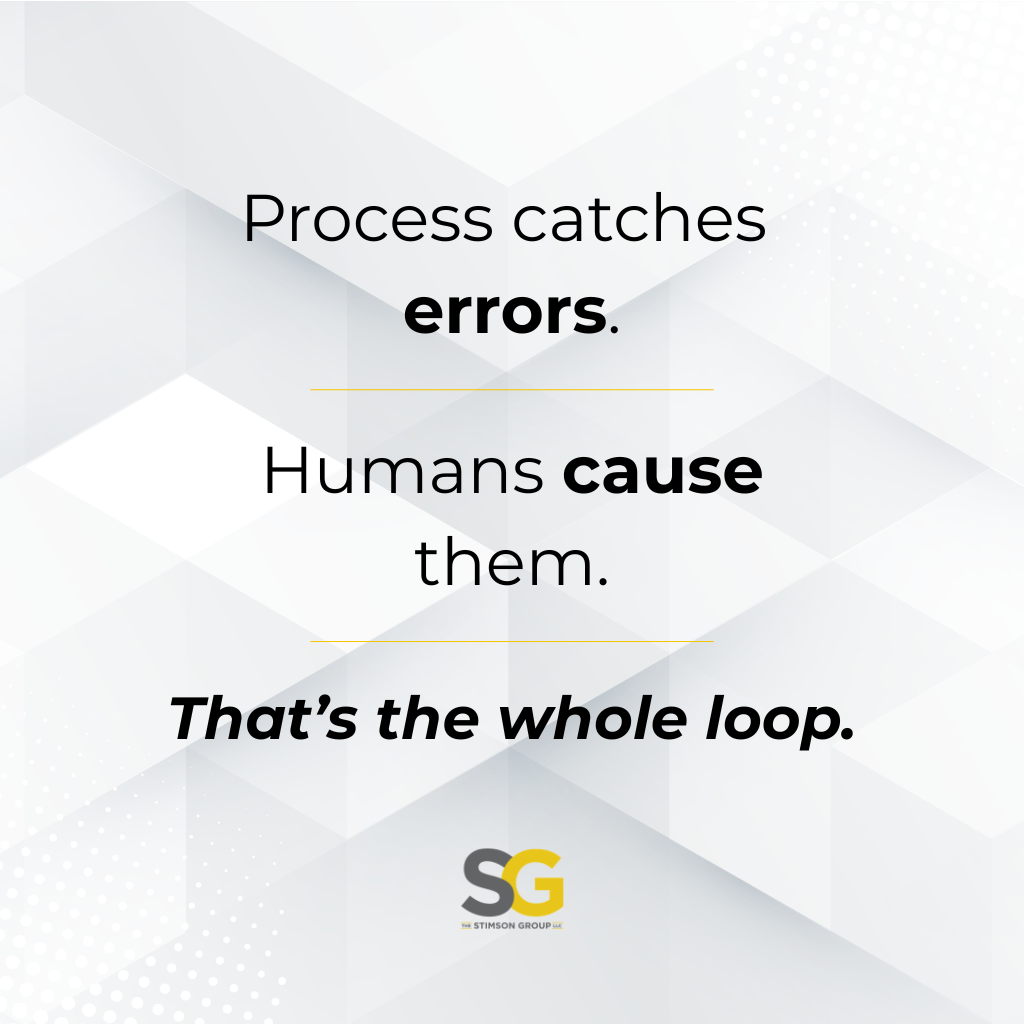
Process catches errors. Humans cause them. That’s the whole loop.
Check-In Beats Check-Out
I walk into a warehouse, and the team says, “Don’t come in — it’s a mess.”
“Where’s all your gear?” I ask.
“Out on shows.”
“Then your warehouse has no business looking like that.”
The warehouse’s first priority isn’t show prep. It’s check-in. We spend more time checking gear in than we do checking it out. We spend more time on quality control on returning gear than on prepping outgoing gear.
That order is what makes show prep fast on the other end.
When you reverse the order, every show prep starts with a missing screw, a mismatched cable, or a case nobody’s QCed since it came off the last show. Now the prep that ought to take two hours takes four. The warehouse problem isn’t busyness; it’s prioritization.
Check-in is the work. Check-out is the result.
Stop, Shift, and Come Back
For most companies, the warehouse team is one team, not two. You can’t have a dedicated check-in crew and a dedicated show prep crew because you don’t have the headcount. Fine. That’s a planning problem.
You know when every truck comes back, when every order ships, and what every piece of gear is doing today. Build that into a 10-minute stand-up at the start of the day: “First two hours we prep audio. The truck from the Cisco show comes in at 11. We stop, shift, unload, check in, QC, go to lunch, then come back to video and lighting on the prep.”
That isn’t interrupted work. That’s planned work, which is the only work the warehouse ever does well. Operations is planning around the corner you can’t see, with the corner you can see fully scheduled.
Stop, shift, get back to work. That’s the warehouse rhythm in a small company.
Plan for “Oh, By the Way” Moments
Every show has “Oh, by the way” moments. Once we get on site, the client tells us what they actually wanted: “The hotel won’t let us into the room until later. A rigging point is non-functional. We need extra cable from the shop.”
If you have a show loading in at 8 a.m. and you don’t have somebody scheduled to do van runs at 10 a.m., you didn’t plan the day. Hector goes back and forth. The shop loads each van, sends it out, and gets the next one staged before he gets back.
“Oh, by the way” moments are normal. The right operations team plans for them, schedules around them, and has a runner ready before the load-in even starts. That kind of planning is what a real roadmap looks like when the show is moving fast.
Tools Don’t Replace Process
Most of us have our equipment barcoded. Some of you have RFID tags and scanning portals.
Those are great tools. They take inventory once or twice a year. They scan equipment in and out so you know what’s available.
Tools don’t replace process. They support it. If you scan items out but never check them onto the truck, the scan didn’t catch the error. If you rely on barcodes for availability and don’t scan them onto the show prep order, you’ll put the same case on two orders and create a workflow problem two days later.
Use the tools the way they’re designed to be used. Decide what your priority is. Better people, tighter process, and smarter tools is the order of operations.
Slower Prep, Fewer Mistakes
If every show prep goes out clean, with a manifest that matches the truck and a truck that matches the venue, you have the capacity to handle the variables you can’t control. That’s what operations actually buys you.
Slow down show prep. Prioritize check-in. Build the third check at the truck. Plan for the oh by the ways. Use the tools the way they’re meant to be used.
Human error is worth celebrating. The expensive mistake somebody makes today is the lesson that makes them more valuable to you tomorrow: “Hey, you’re worth more to me because you know how to make a very expensive mistake. Don’t do it again. Here’s what we changed in the process to prevent it.”
Building people up like that is how the team grows without growing the headcount.


Leave a Reply