





Listen instead on your Monday Morning Drive:
One of the most common calls I get goes like this: A business owner looks at next year’s calendar, sees no confirmed shows, and panics.
It happens every November. No revenue in sight for January. December won’t fix it. The desperation is real. And the root cause is a sales problem, not a timing problem.
It doesn’t take many questions to figure out how they got there. Zero marketing. A website and nothing more. No outreach, events, or content. Every lead comes from word of mouth or random website form fills (which aren’t exactly curated prospects).
The ask is always the same: “How do I get revenue in the next 90 days?”
The answer is simple. Call every buyer you’ve worked with. Ask if they have shows coming up. Price to win. That’s it. Boots on the ground, extrovert pill, start dialing. If you haven’t talked to a client in five years, you’ve got nothing to lose by asking.
Marketing won’t rescue you from that hole. But once you’re out, it’ll keep you from falling back in.
Understand Your Conversion Points
Before spending a dollar on marketing, answer one question: How did your best buyers become buyers?
Not your biggest client. Your best client, the one you want more of. There’s a key difference between clients and customers. How did they find you? Who referred them? What made them pick up the phone?
If the answer is “referral,” start there. If the answer is “they visited our shop,” build around that. Marketing works when it creates more of the interactions that actually convert prospects into opportunities.
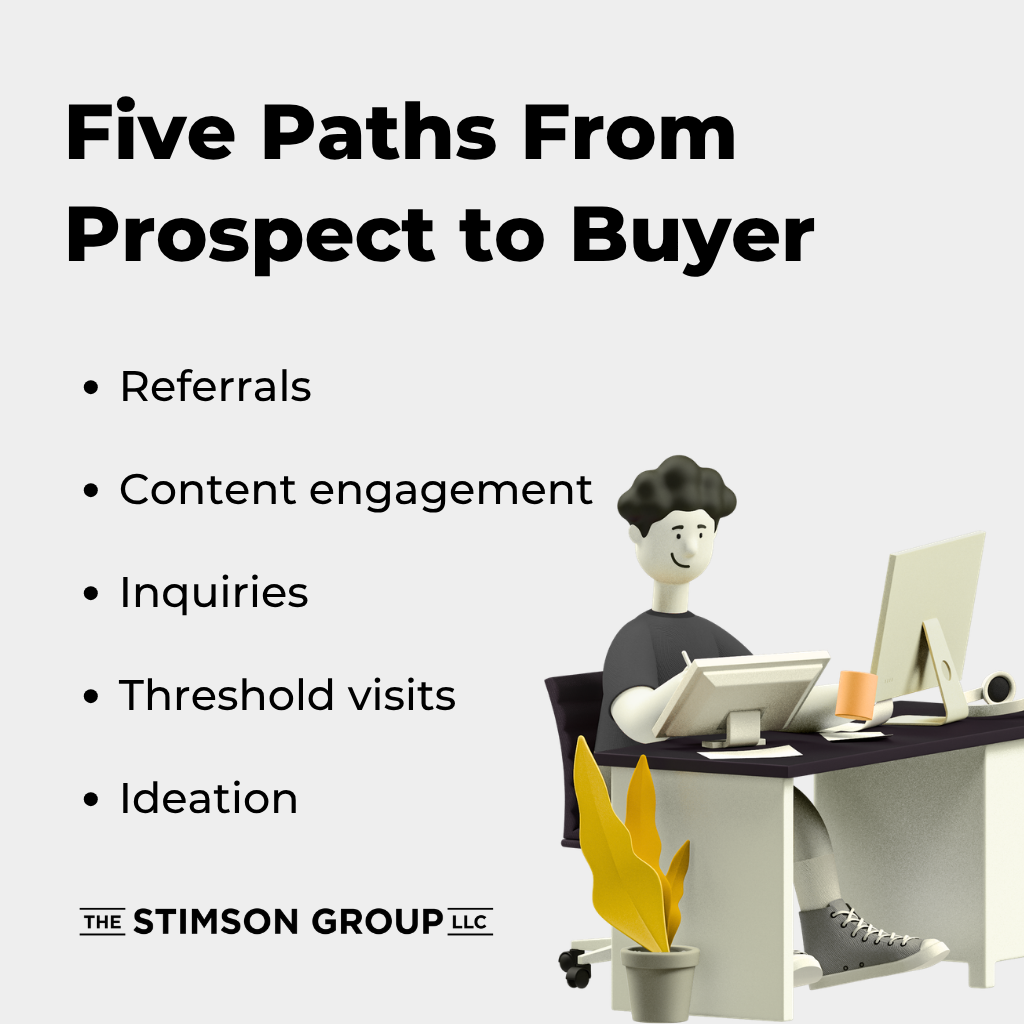
Five Paths From Prospect to Buyer
Referrals. If referrals drive your best business, ask for them deliberately — at every post-show wrap-up, client dinner, and industry event. Good buyers want you to succeed and will happily connect you with other good buyers. Bad buyers hoard your time and won’t share you. That says all you need to know about the relationship.
Content engagement. Post a case study on LinkedIn. Share a photo from a recent show with a short story about the problem you solved. When somebody tags a colleague and says “Bob, look at this,” that’s gold. Jump on it. If you don’t post, you don’t get engagement. It’s that simple.
Inquiries. A prospect finds you and reaches out. The experience you create in that moment matters. If your best client relationships started with a cold call and a great first impression, build your marketing to generate more inquiries.
Threshold visits. Getting a prospect through your front door is the single most powerful conversion tool in your arsenal. Most AV companies have impressive operations, and prospects who visit convert at twice the rate of any other engagement type. That’s how you get in front of the RFP. Fly them in. Put them up at a nice hotel. Show them your warehouse, team, and process. Invest in it however you need to.
Ideation. Sit down with a prospect, talk about their project, and share ideas. You’ll give up some intellectual property. They’ll give up some of theirs. That collaboration builds trust faster than any proposal ever will. If ideation goes well, you’ve got a buyer. This is what business development looks like in practice.
Pick one to start. Build the rest over time.
What Marketing Does Over Time
Marketing won’t fill your pipeline in 90 days. Over the long haul, it does four jobs.
Raises awareness. Prospects need to have heard of you before they picture themselves working with you. Online presence, event sponsorships, networking. Give them a positive association with your name before they ever need AV production.
Clarifies your value. Are you high-touch and premium? Or do you stretch every dollar for maximum impact? Either works. Pick your lane and own it. If buyers think you’re too expensive, the problem is usually how value is communicated, not what you charge.
Aligns with ideal buyers. When prospects call using your language, framing, and terminology, your marketing is doing its job. If price-only shoppers keep calling and you sell on value, the message isn’t clear enough.
Filters out bad fits. Clear marketing means fewer conversations with the wrong people. That frees up time for the right ones. Your top-of-funnel can never be too big. Your capacity to process the best prospects determines how big your business can be. That’s the core idea behind turning down better business.
Start With What Works
Find the conversion point where you’ve had the most success: referrals, engagement, inquiries, threshold, ideation. Build your sales funnel around those moments.
You can get more sophisticated later. Right now, pick up the phone and talk to your buyers. Find out what’s happening with them. Remember what it feels like to engage with somebody.


Leave a Reply