





Listen instead on your Monday Morning Drive:
Years ago, I sat having drinks with an account executive after a big medical convention at the Anatole in Dallas. I had 40 or 50 crew members there from my staffing company, and we’d just finished settling the bill.
I asked him about his pricing strategy. He pulled a pen from his pocket, held it up, and said, “This is what makes money.”
Not the rental catalog. Not the standard rates mailed to every buyer. The pen. When a buyer asked for an item off-quote, he wrote whatever price he felt was appropriate. Anything he’d given away to land the bid, he reclaimed through change orders.
At the time, it felt dishonest. Then I thought about it differently. The buyer never questioned the line items. The buyer asked two questions: Did the show go well, and was the total cost reasonable? If both answers were yes, nobody looked at the math.
That story has stuck with me for decades. And it raises a question every AV company owner needs to sit with: How honest is your current pricing model?
Your Quotes Don’t Add Up
Pull your last 10 quotes. Find the five-day job you billed two rental days for. The week-long event billed at two and a half. The one-day show billed as a half day.
Now look at the discount structures. Different comp items, labor rates, and multipliers on every single project. If you’re still quoting line items, every one of those variables is exposed.
Have two of your salespeople quote the same job independently. Unless you’re running centralized estimating, those numbers won’t match. Too many variables and judgment calls. Rental pricing looks honest on the surface, but it’s a patchwork of improvisation underneath.
Your buyers aren’t naive. And if two of them compare notes, you’ve got a credibility problem.
Two Numbers, Not 15
Forget your price sheets. Your cost basis shifts with every project, vendor quote, and season.
Estimating comes down to two numbers: cost and margin. Cost is measurable: gear, talent, trucks, hotels. Margin is aspirational: how much profit do you need from this project? And if you’re still calling it a markup, that word costs you money.
Adjust pricing to match your costs. Flex margins based on demand and seasonality. You’re working with two variables instead of the 15 buried in your current rental model. That’s a much more honest conversation to have with a buyer.
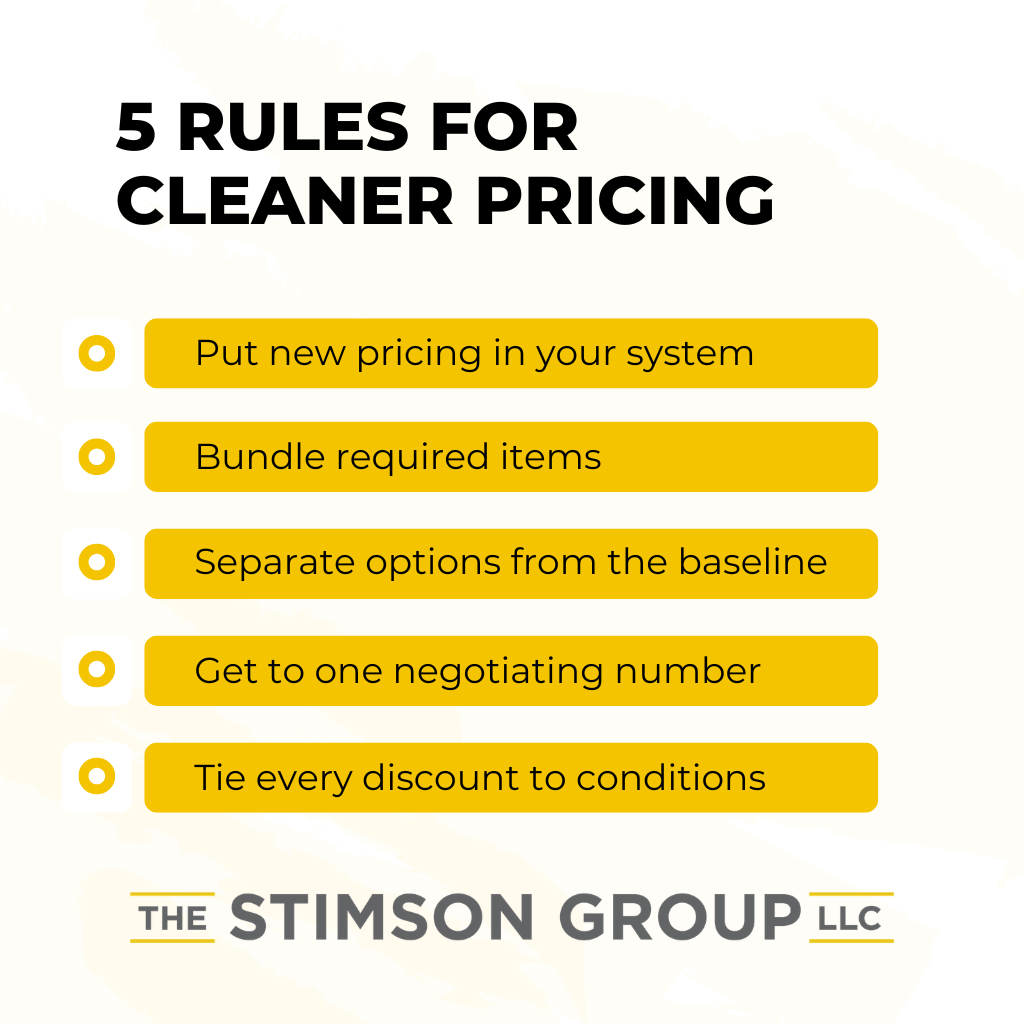
Five Rules for Cleaner Pricing
If the rental model is what you’ve got, make it work better.
Put new pricing in your system. When you get a vendor quote on LED tiles or specialty gear, enter it in your quoting software. Don’t tuck a sticky note in your desk drawer. Every salesperson on your team needs the same numbers.
Bundle required items. If a studio camera package is non-negotiable for the job, don’t list the cameras, cables, and engineering kit as separate line items. One item, one price. Don’t give buyers the impression they can strip out gear you need to do the job right.
Separate options from the baseline. If the buyer might change from a wide-audience layout to a deep-room setup, the baseline stays the same. The long-lens upgrade lives in a clearly labeled “options” section. Buyers see exactly what they can control, and you protect your baseline scope.
Get to one negotiating number. The show package (load in, rehearsals, show, load out) gets one price. Pre-production and creative support each get their own single price. No line-item haggling, discount stacking, or five levers for the buyer to pull. One number per deliverable.
Tie every discount to conditions. A discount without terms is a confession that you overpriced the original quote. “Confirm by February 1 and save $30,000” gives the buyer a choice and keeps you in control. If the deadline passes, the proposal expires and you reprice. When buyers push back, know that you’re not too expensive.
Get Your Team on the Same Page
Picture this: A buyer talks to two different salespeople and gets two different prices for the same show.
That happens when your system doesn’t teach your sales team how to price. When every salesperson pulls numbers from their own mental model, you get inconsistency. Inconsistency erodes trust. Pricing has always been a shell game, but it doesn’t have to be.
Build your pricing so every quote follows the same logic. Consistent baseline numbers in the system. One negotiating point per package. Discount terms applied the same way across the entire team.
Honest pricing doesn’t mean you make less money. It means your buyers understand what they’re paying for, your salespeople stop guessing, and your margins hold up under scrutiny.


Leave a Reply