





Listen instead on your Monday Morning Drive:
One of my fondest memories of working inside a business was strategy … or what I thought was strategy.
The new CEO, who’d just bought our company, sat down with us, three-ring binder in hand, and announced that we were going to “do strategy.”
Fantastic. I focused on tactics all the time. I wanted to understand how strategic thinking actually worked.
Two days locked up in the conference room later, I came out woefully disappointed.
What we’d done was budgeting. Forecasting. Wishing the past year had gone differently. Identifying obstacles to the wishes. Guessing what customers might do, guessing what technology might do. Then we wrapped it up with a shiny new budget and a big puff of hopium that the numbers we’d made up would map to next year’s reality.
Two days later, the company was exactly the same as it had been.
A year or two later, I went back to school, got an MBA, and learned what strategy actually is.
Strategy Is What, Tactics Are How
Strategy is engineering what you want to happen based on what you think will happen.
Strategy isn’t prediction. Strategy uses prediction as input, and then the whole point is to change what would happen by default.
Tactics are how. Strategy is what.
Setting the how aside is the hard part for most owners, because we’re wired to fix problems with action. Strategic thinking requires you to stop solving and start asking. The roadmap comes first, and the tactics follow.
Clear the Decks Before You Start
Before you sit down for the strategy session, run a self-evaluation. The point is to clear out the garbage you bring into the room before you start thinking about the future.
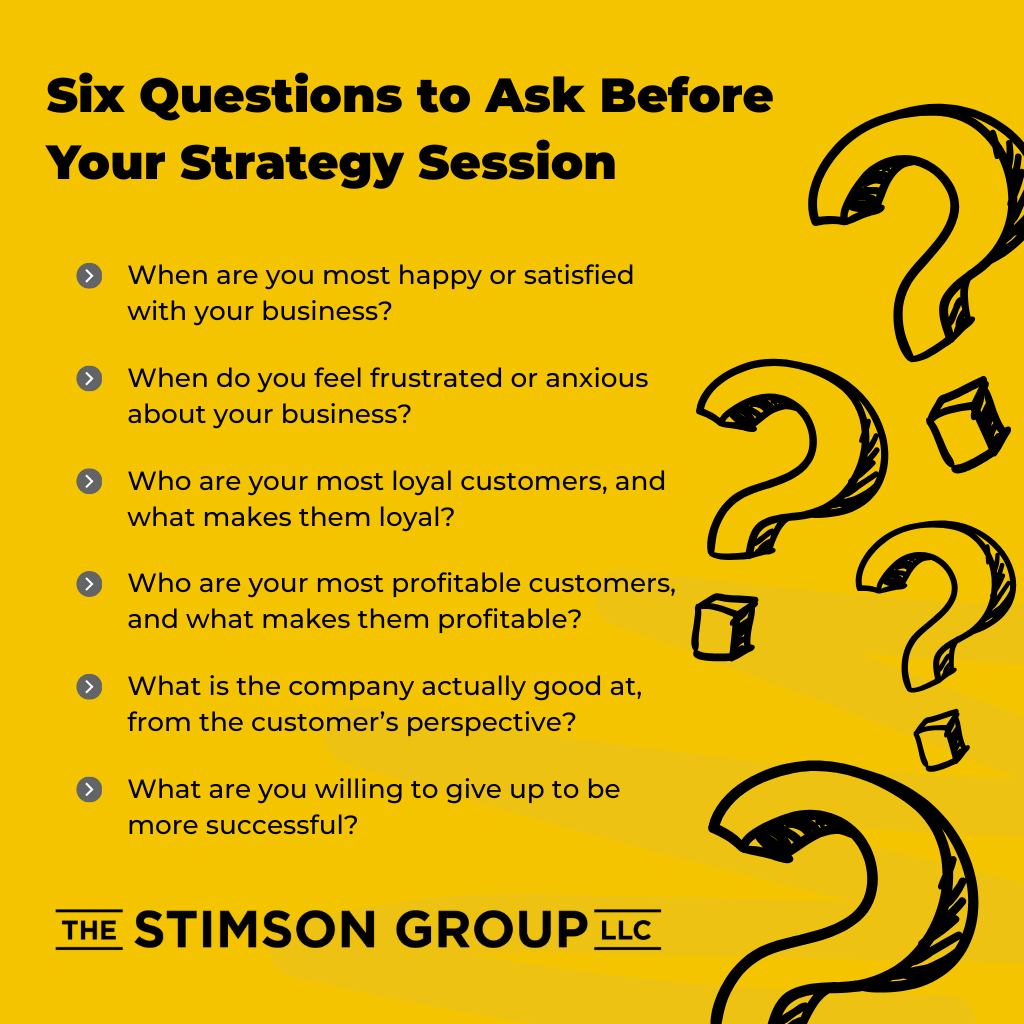
Start by answering these six questions honestly:
- When are you most happy or satisfied with your business?
- When do you feel frustrated or anxious about your business?
- Who are your most loyal customers, and what makes them loyal?
- Who are your most profitable customers, and what makes them profitable?
- What is the company actually good at, from the customer’s perspective?
- What are you willing to give up to be more successful?
The last question is the hardest. Most of us hold on to revenue, customers, headcount, and habits we’d be better off without.
If someone told you you could vaporize 20% of your revenue and still grow your net profit, would you do it? Picky companies make those calls every quarter.
Adjacent Products and Services
Your customers are buying adjacent services from somebody. Could they be buying them from you?
Sound and lighting companies whose customers also need video. Audio companies whose customers want a one-stop shop for staging. Production companies whose customers are paying somebody else to handle creative direction.
The list is industry-specific, and the answers come from listening to what your customers complain about with other vendors. Knowing your customers by name gives you the answers to this question for free.
Buyers You Don’t Speak To
Who’s buying what you already sell, in a segment you don’t market to?
The classic example is a corporate AV company that’s slow in the summer while a festival market uses the same gear. Or a festival company with a quiet winter while the corporate market sits right there.
The gap between two adjacent markets is usually bigger than it looks from the outside. Different sales cycles, different buyer types, different relationship norms.
The strategic decision isn’t, “Do we go after festivals?” The decision is whether the gap is worth the investment to cross. Once you’ve decided yes, the tactics figure themselves out. Building a scalable sales engine starts with picking the right buyers to chase.
Untapped or Metered Capacity
What capacity is constraining your business right now, and what would change if you weren’t constrained by it?
If you can only get 10 quotes out per week and the constraint is personnel, process, or tools, doubling that capacity has cascading effects.
More quotes mean more closes. More closes mean more revenue. More revenue justifies more investment in whatever eliminated the original constraint.
The strategic question isn’t, “How do we get to 20 quotes per week?” That’s tactics. The strategic question is whether 20 quotes per week would alter the business’s trajectory.
Once you’ve decided, “Yes,” the tactical decisions get easier. Building the team for scale makes the tactical decisions work.
A Missing Approach
What experience are you missing, customer or vendor or show site, that would change what people say about you?
The brand reinforcement question is about retention, profitability, and the feel of the business. The approach is where most companies underinvest, because ROI is harder to measure than a piece of gear.
A missing approach might be a faster proposal cycle. A more polished show-site experience for the client’s executives. A vendor onboarding process that makes good freelancers want to work with you over your competitors.
The decision isn’t whether to invest. The decision is which experience matters most to the customer you’re trying to keep. Your sales funnel runs on experiences more than on the gear or the deck.
Strategy Needs People Who Can Run With It
Strategic thinking is one half of the job. The other half is implementation.
Once you’ve answered the right questions and made the right calls, somebody has to take the answers and run with them. If your team can’t run with a strategic call, you don’t have a strategy problem. You have a team problem.
Surround yourself with people who take a good decision and turn it into action without needing you in the room. That’s how strategy moves from a binder on the shelf to a different revenue line on the P&L 18 months later. Hire the team that can execute, and the strategy work starts paying off.
When you sit down for your next strategy session, leave the budget in the conference room down the hall. Ask the four questions. Decide on the answers. Let the tactics figure themselves out.


Leave a Reply