





Listen instead on your Monday Morning Drive:
Every owner has that moment. Sometimes it lands in year one. Sometimes it waits until year 30. You realize you’re not the smartest person in the room. Your company isn’t the best at execution in the market.
That’s humbling. It’s also useful.
Once you accept that, the goals get more reasonable. The wins come faster from there.
Some owners never reach that moment. They stay convinced the fix is more revenue or more effort, and they say the same lines in management meetings that give them away.
These are the five statements I hear right before an owner loses control of the business. Each one is a wake-up call. Each one is fixable if you catch it early. The roadmap to balance is what these five statements test.
What Owners Actually Want
Owners want five specific outcomes from a business. Not glory. Not vindication:
- Time. The kind you thought you’d never get back.
- Operating profit. The number that shows the business is tooled correctly and knows how to make money.
- Satisfaction. The kind that shows up when a customer says thank you and means it.
- Trust in the team. Enough of it that you can leave for a week and come back to a business still standing.
- Control over trajectory. The freedom to steer toward the opportunities you actually want.
When those five come together, that’s balance. Building for those priorities is what makes owning a business worth the work.
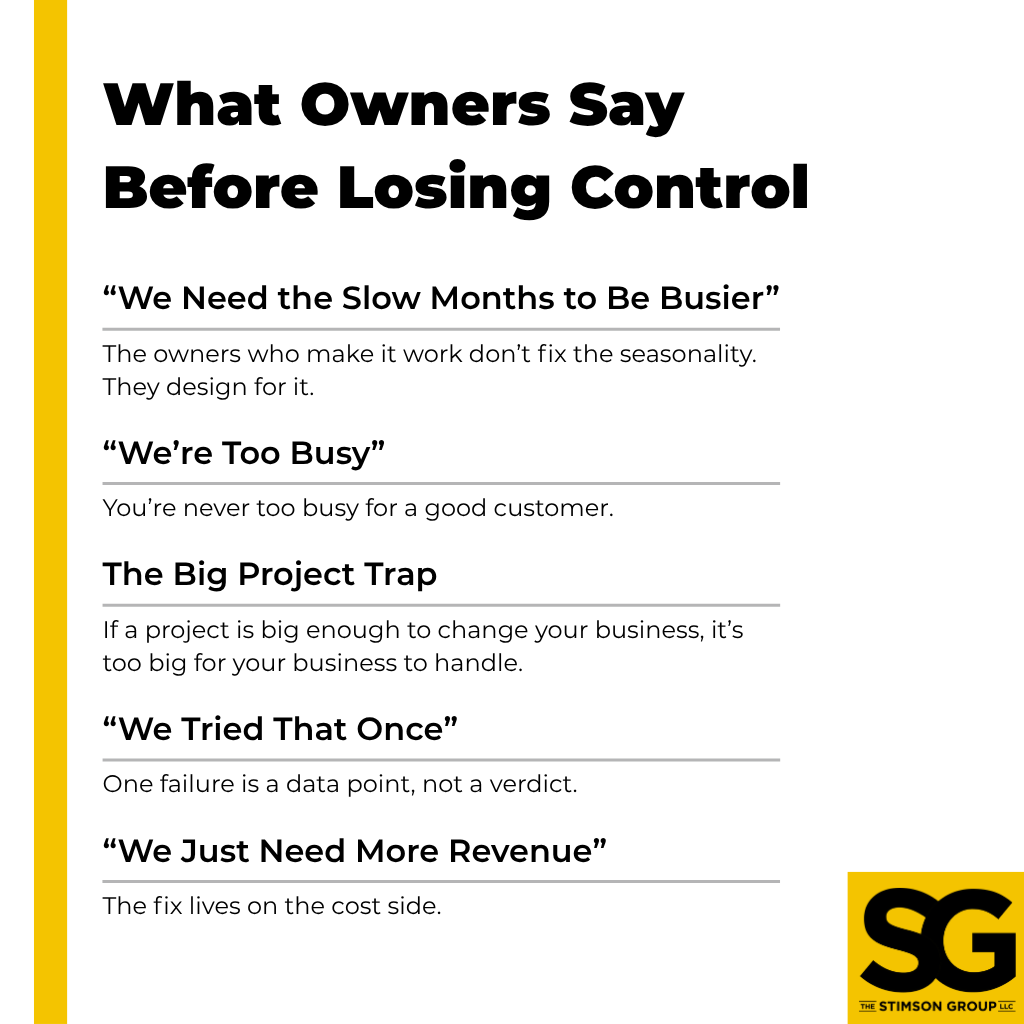
“We Need the Slow Months to Be Busier”
Every seasonal business has slow months. The corporate side quiets down in July. The entertainment side quiets down in winter. That pattern hasn’t changed in 40 years, and nobody has figured out how to break it.
“We need the slow months to be busier” is a statement that denies the reality of the industry you’re in.
The owners who make it work don’t fix the seasonality. They design for it. Busy months fund the slow ones, and the calendar breathes when the demand isn’t there.
Slow season is a sales problem, and pretending it isn’t is what keeps owners stuck.
“We’re Too Busy”
The second statement contradicts the first. The same owner who said “we need the slow months to be busier” in July is saying “we’re too busy” in October.
The management team gets nervous. Which client do we send away? Do we turn down that new project?
You’re never too busy for a good customer. Build the capacity instead of turning the work away.
Turning down a good customer isn’t a scheduling problem. That customer will start rethinking whether you’re the right vendor for the rest of their calendar.
Why your team is always too busy is usually about capacity design rather than actual workload.
The Big Project Trap
The third statement is about the seven-figure job that’s going to put the company on the map. Great. So does a tsunami.
If a project is big enough to change your business, it’s too big for your business to handle.
The math is simple. A big project consumes your best crew for months. Bread-and-butter clients get demoted, and some wander off to a vendor who wasn’t chasing the shiny job.
You end the year with a high-revenue month, a lower gross profit percentage, and two or three fewer regular clients than you started with. Growth and scalability come from doing more of what you’re already good at. Betting the whole calendar on one big job delivers the opposite.
“We Tried That Once”
The fourth statement stops improvement dead in a management meeting. “We tried that once, and it didn’t work. Not doing it again.”
Try what once? Hiring a salesperson, running a proper discovery call, or building a project coordinator role? Take your pick, because the “we tried that once” line covers a lot of ground.
One failure is a data point, not a verdict.
I tried to tie my shoes at age three. Took me 10 tries before I got it, and it never occurred to me to give up on shoes.
If the last hire didn’t stick, look at the hiring process before blaming the candidate pool. Hire and train the team that fits, and try again with better questions.
“We Just Need More Revenue”
The fifth statement is the most seductive: “We just need more revenue. The rest will sort itself out.”
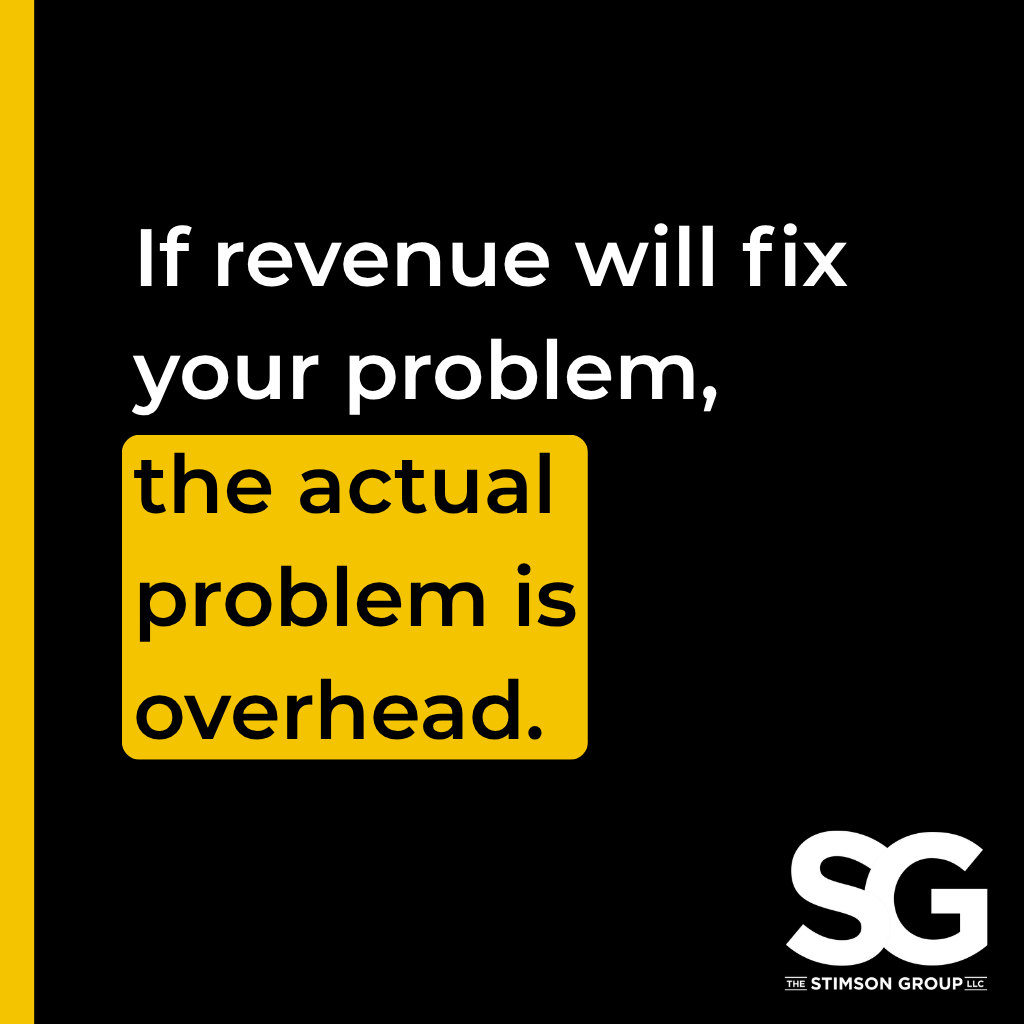
If revenue will fix your problem, the actual problem is overhead.
You built the overhead to serve revenue you thought you had. Now the revenue is short and the overhead is too heavy. The fix lives on the cost side.
More revenue looks like the answer, and getting it isn’t hard. Keeping it and pricing it correctly is where the work lives. Start fresh on what’s broken, and revenue becomes the reward.
What to Say Instead
The five statements are wake-up calls, not death sentences.
Every owner has said at least one of them. Some owners have said all five in a single management meeting. Every accidental entrepreneur learns this about themselves eventually.
Balance is what makes owning the business worth it. The five statements are what pull you away from it.
Listen for the statements. When you hear yourself say one, pause and figure out what to do differently.


Leave a Reply