





Listen instead on your Monday Morning Drive:
When I started in this industry, I was a freelancer looking for gigs. I’d stop by rental offices, talk to the rental manager, and find out where their trucks were going.
If I hung around long enough, an account executive would run in needing an operator at the Hyatt tomorrow. The rental manager would look at me and ask, “Are you available?” Off I’d go.
I’d pick up rental brochures from the front counter and carry a handful to the next office I visited. Those brochures were updated every six months when somebody raised their tripod screen from $16 to $17.50. It was a race to see who could charge more, because if one company raised prices, it gave everyone else permission to follow.
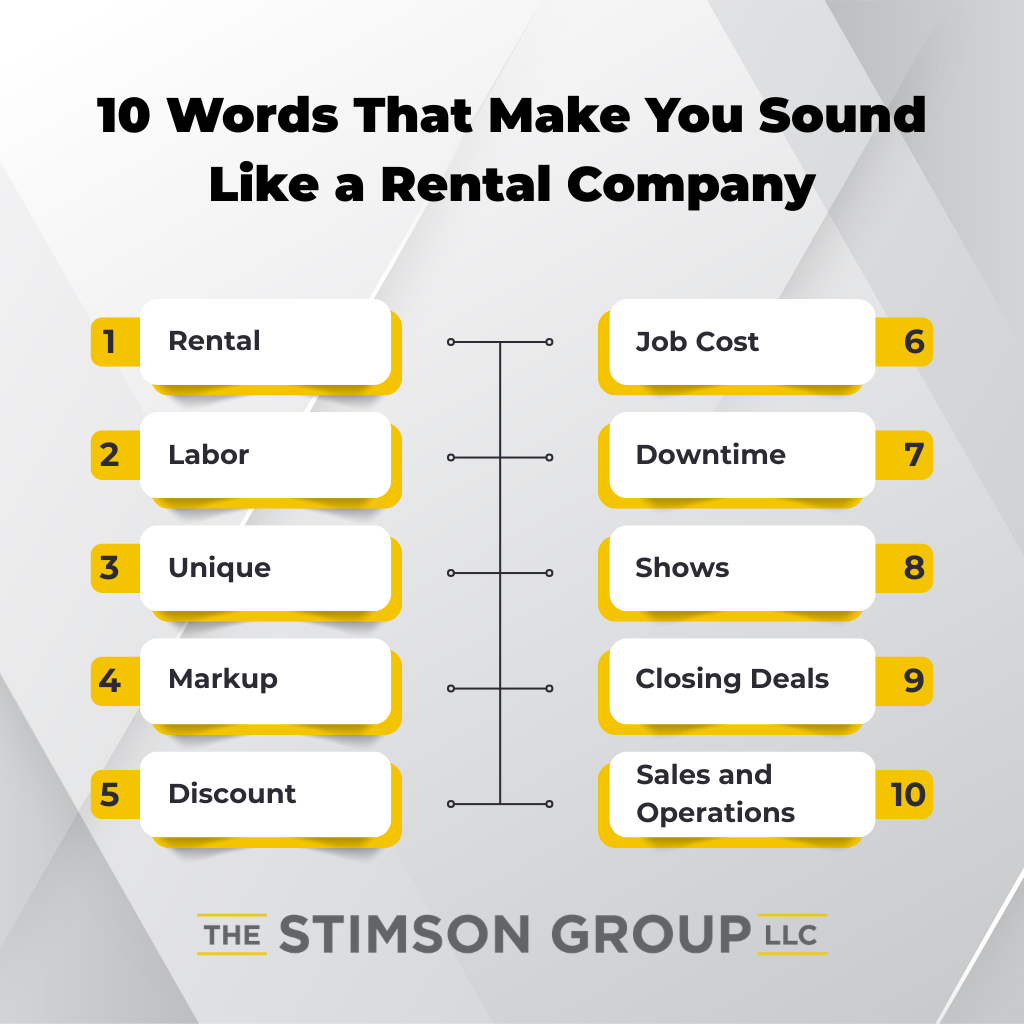
We were taking cues from what other people charged to decide what we’d charge. That was the rental era. And too many AV companies still talk like they’re in it.
Rental
Rental is a transaction. You buy something once, rent it out, get it back, rent it again. The buyer is acquiring a commodity. Maybe you’re more convenient, maybe your gear is newer, but it all comes down to price.
If you look at your revenue history, pure rental transactions account for a tiny fraction of your revenue. Most of your work is service: getting your client’s show done. But the word “rental” tells buyers to shop around. It applies a price comparison to every single line item on the order.
An accounting classification that doesn’t concern your customers has no business entering your conversations with them.
Labor
When we think of a laborer, we picture someone in construction or manufacturing doing piecemeal work. They’re trainable, maybe skilled, but interchangeable.
Call them crew, support, team, talent, or technicians. As soon as you say “labor,” you make your people transactional and replaceable.
A staffing agency finds somebody with particular skills for a specific job description. A labor company finds bodies who can lift 35 pounds. You’re not running a labor company.
Unique
“We’re a very unique business.”
I hear it all the time. And no, you’re not. You’ve got products, services, bookkeepers, and accounting. Every business in the world is a kid with a lemonade stand, a sign, and a price.
Calling yourself unique is a defense mechanism. You’re trying to fend off criticism by saying, “We just do things differently.” But presenting yourself as unique takes a lot of backing up to pull off.
What you’re actually trying to be is special. That’s earned through performance, not a label.
Markup
Markup is fool’s math. A 30% markup on a $100 item gives you $130 and a $30 profit. But that’s only 25% margin. The formula tells you what you think you’ll charge the customer, not how much money you’ll actually make.
Salespeople are trained on markup because it feels safe. “I can’t mark it up more than 30%.” Yes, you can. In a service industry, you absolutely can mark something up 400%, because the difference between your cost to deliver and the value to the customer is enormous.
Teach your team to calculate margin instead. Margin tells you how much money you keep after the job is done.
Discount
Discount is an infinite variable and a holdover from the rental era. It’s a B2B concept for volume: buy more, pay less per unit. In your business, it creates another negotiating point on top of every other one you’ve already exposed.
When I was in construction, a lumber desk guy didn’t give me a discount. He gave me a better price based on the volume of my project. The value of the product stayed the same. My costs went down.
Adjust your margin expectations instead of slapping a discount on the quote. “I can accept a lower margin if you pay this much in advance by this date.” That’s a negotiation with terms. A discount is an invitation to ask for more.
Job Cost
Your job cost is meaningless if your prices are made up. And most are.
Job cost assumes a stable price, but if your sale price was artificially set and then discounted, you’re not measuring real profitability. You’re measuring a guess.
How many of you record discounts as a job cost? You don’t. You put the net number in and call it a day.
Job-to-job comparisons are inherently unfair because no two jobs share the same overlaps, restrictions, and availability. If you’re basing commission on job cost, you’re incentivizing something your salespeople can’t actually control.
Your real concern is overhead. Buy your cost of goods at the best price you can, and focus on what your real margins look like across the business.
Downtime
“When we have some downtime, we’ll clean up the warehouse.”
If keeping the warehouse clean only happens when you have nothing else to do, what does that say about your priorities? Do you want to eat at a restaurant that only cleans the kitchen in August because that’s the slow month?
You operate a year-round business. Waiting for downtime is a way of saying you’ll never get it done. And if you’re using the word “downtime” frequently, your overhead is probably too high.
Shows
“We do shows.”
No. Your customers do shows. IBM did that national sales meeting. You helped IBM get their show done.
One-hundred percent of execution can be outsourced. The planning process creates all the value: selling at a perceived value, hiring the right people, sending the right gear, making sure everyone has the information they need.
You’re not doing the show. You’re getting the show done for your client. Don’t take away your client’s ownership of what is fundamentally their event.
Closing Deals
“We haven’t closed that deal yet.” You’re never going to close it. Not the way you think.
Show production is hundreds of small agreements over weeks or months. Trying to package all of it into a single signed proposal creates a bottleneck in which both sides wait for perfect information that doesn’t exist.
Find a reason to get started. Not “we finally agreed on everything,” just “we agreed on the next step.” Get the next step agreed upon, and the deal takes care of itself.
Your proposals are already a commodity. Stop treating them as finish lines.
Sales and Operations
In a rental company, sales and operations are at war.
Sales sold it one way. Operations found a better way to execute it. The commission structure is built on job cost, which you already know is bad math. Now two departments are fighting over numbers that don’t mean what anyone thinks they mean.
Sales is a subset of selling. Selling and planning are collaborative. Sales and operations are combative. Replace the silos with cooperation.
Your customer doesn’t care which department owns the problem. They care that their show gets done.
A memo won’t fix this. These words reflect a mindset rooted in the rental era. If you want to stop looking and acting like a rental company, start by changing the language.
Hold each other accountable. The positive alternatives are right there once you start looking for them.


Leave a Reply