


Listen instead on your Monday Morning Drive:
Small talk drains energy from business conversations. Some people avoid networking entirely just to escape those painful exchanges about the weather and their weekend plans.
But you can’t avoid it completely. Plenty of people (we call them extroverts) actually enjoy small talk. They get energy from these conversations.
In business situations, you need to participate without getting trapped.
The Last Word Technique
A mentor once taught me this technique. He hated small talk so much he’d publicly shame anyone who tried it with him. But he understood that you sometimes need to play along.
When someone makes a small talk statement, repeat their last word:
- “What crazy weather we’re having!” “Having?” (They nod and continue talking.)
- “So many people came to the airport this week!” “Airport?” (They launch into another story.)
Small talkers just want engagement. They want that give-and-take feeling. Give them a word back (their own word), add a nod or a concerned look, and they’ll keep talking. They’ll think you’re a great conversationalist because you’re so engaged.
You’re not being rude. You’re helping them do what they want to do: talk.
Why This Matters for Discovery Calls
That same listening skill becomes your most powerful tool in discovery calls.
Too many companies treat discovery calls as their chance to show off. They think clients scheduled the call to learn about them.
Wrong.
Discovery calls exist for you to discover the client. You’re learning about their event, their challenges, and their needs. You’re not selling your services.
You’ll get your chance to talk. But first, you need to reach the point where they’ll actually listen. They won’t get there until you’ve finished listening to them.

Starting the Discovery Call
After introductions, hand over control immediately:
“I’d like to turn the agenda over to you. We’d love to hear more about your criteria. What’s important to you? What are you looking for to make your event more successful?”
Then shut up.
They might deflect: “Well, we’re really hoping to hear more about what you guys do.”
Smile. Redirect with specific questions: “For instance, do you need help with presenter preparation? Have you had trouble with registration flow?”
Then shut up again.
When they answer, ask for more: “This sounds important to you. Can you tell me what else matters?”
The Power of Open-Ended Questions
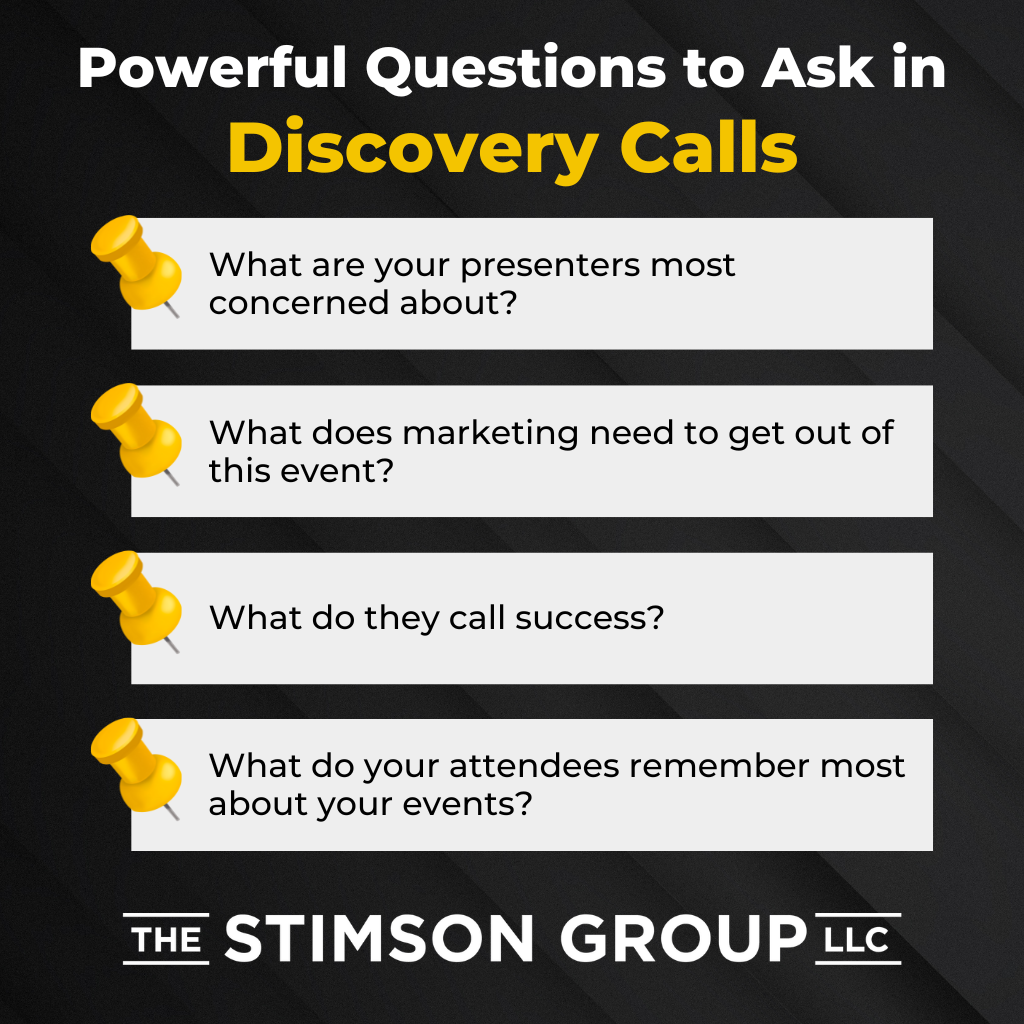
Keep asking questions that force detailed answers:
- What are your presenters most concerned about?
- What does marketing need to get out of this event?
- What do they call success?
- What do your attendees remember most about your events?
Avoid yes-or-no questions. Instead of, “Can you share some stories about that?” ask, “I bet you have some stories about that. What happened?”
Clients won’t trash your competitors or throw anyone under the bus. But they will tell you what works for them and what makes them comfortable. Listen for the tidbits about what they wish worked better.
Your Deck Is Too Big
You brought 30 slides. You need five.
The whole point of listening during discovery is figuring out which five slides matter. While they talk, make notes:
- They mentioned speaker comfort (show the speaker-ready room slide).
- They worried about executive presentations (show the executive review process).
- They need help with content development (show the creative services slide).
Don’t show everything you do. If it doesn’t apply to their event, why would they care?
When You Finally Present
At some point, they’ll say, “I’ve been talking too much. Please tell me about your business.”
Give them 15 seconds of background: “We’re a 40-year-old company. Here’s how we started. This is what we stand for. But you already know that, or you wouldn’t be talking to us. Let me show you how our best customers work with us.”
Now you’re not selling. You’re explaining your process. Pull up those five slides you identified while listening.
Talk about the people they’ll actually interact with. They’ll work with your producer team for the next 90 days. They’ll barely see your technicians except when someone’s adjusting their mic on show day. So talk about producers, not tech staff.
Keep it Short
In a 30-minute discovery call, you get eight minutes to present. In a 60-minute call, you get 12 minutes.
That’s it.
Any time they ask a question, go back to Q&A mode. Ask another open-ended question. The more they talk, the more relevant your presentation becomes.
When they ask, “What else do you do?” resist the urge to list everything. Say, “We do a lot, but out of respect for your time, let’s focus on what you need most.”
That respect for their time makes a difference.
Connect Back to Their Needs
When you do present, tie every point to something they said.
Did they mention speakers feeling unprepared? “You talked about speaker comfort. Here’s how we address that with our speaker-ready room.”
Did they mention they’re worried about content consistency? “You mentioned keeping marketing happy. Our creative team handles that by…”
You’re not saying their previous choices were wrong. You’re showing how you address the specific concerns they raised.
No judgment. Just solutions.
Skip the Gear Talk
“Do you own your equipment?” “Yes, tons of it.” Move on.
“Do you have technicians on staff?” “Yes, plus a professional freelance pool. Every job is custom-built.” Move on.
Gear doesn’t matter in discovery calls. Process matters. People matter. Solutions matter.
Focus on baseline needs first: Everyone sees. Everyone hears. Your message gets delivered. These are non-negotiables. Then, discuss how to spend the remaining budget wisely with your production team’s guidance.
Always Schedule the Next Call
Never end a discovery call without scheduling the next conversation. After discovery, you’ll probably discuss:
- Budgets
- Creative concepts
- Content development
Pick one. Schedule it. Keep the momentum going.
The Power of the Discovery Paradox
Discovery calls aren’t your chance to impress clients with everything you can do. They’re your opportunity to understand what clients actually need.
Master the art of listening (even if that means suffering through small talk). Show only what matters. Respect their time.
The less you talk during discovery, the more likely you are to win the business. Because when you finally do speak, you’ll say exactly what they need to hear.


Leave a Reply