





Listen instead on your Monday Morning Drive:
Q1 is winding down. You’ve got real numbers in front of you. Do you know what they’re saying?
In 2000, my company had its best year on record. After nearly a decade of 30–40% compound annual growth, hitting the turn of the century with record-breaking results felt like a big deal.
Part of my job was forecasting. My boss and I were figuring it out as we went.
We looked at recurring business, seasonal patterns, and pipeline activity. After a few years of practice, I could get within 10% of a monthly revenue number six months out.
Then came the spring of 2001.
I was shifting my forecast into Q3 and Q4. September was always our second-busiest month. I sat down, looked at the numbers, and saw an empty calendar.
One semi-confirmed job. Almost no quotes. Zero activity. Without forecasting, I might not have noticed until July.
We had a conversation. We determined that a recession had already begun, and our clients (who had better economists than we did) were pulling back on spending. They weren’t planning events. They were cutting budgets. We were at the bottom of the food chain, and we only just found out.
Thank goodness we caught it. We pulled back on some spending, trimmed some CAPEX, and let a few marginal employees go. It wasn’t a major correction. When 9/11 happened and business dropped 30–40% the following year, we were already in the right mindset to make deeper cuts and survive.
Forecasting gave us that head start. If you don’t forecast, you don’t get one.
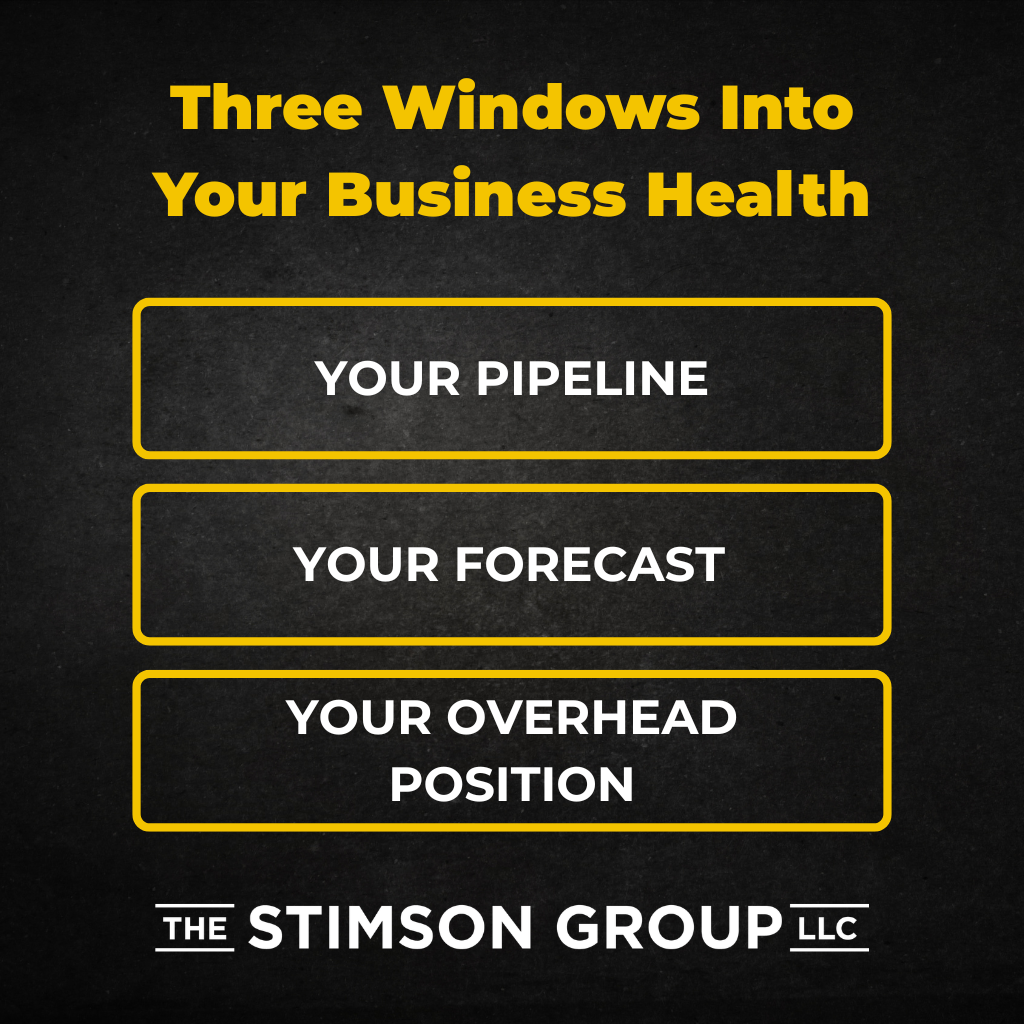
Three Windows Into Your Business
This year could be devastating for your business. It could be the best year you’ve ever had. If you don’t know which it’ll be, that’s a problem.
When I’m working with clients, I pay attention to signals they may not see. Three categories tell me almost all I need to know about where a business is headed.
1. Your Pipeline
Most owners understand sales funnels and pipelines. Most focus on the bottom third, where quotes, RFPs, and proposals turn into confirmations.
The bottom of the funnel isn’t where the important information lives.
The top of the funnel feeds the rest. How many leads are you talking to? How many prospects are you engaging?
How many opportunities are developing right now?
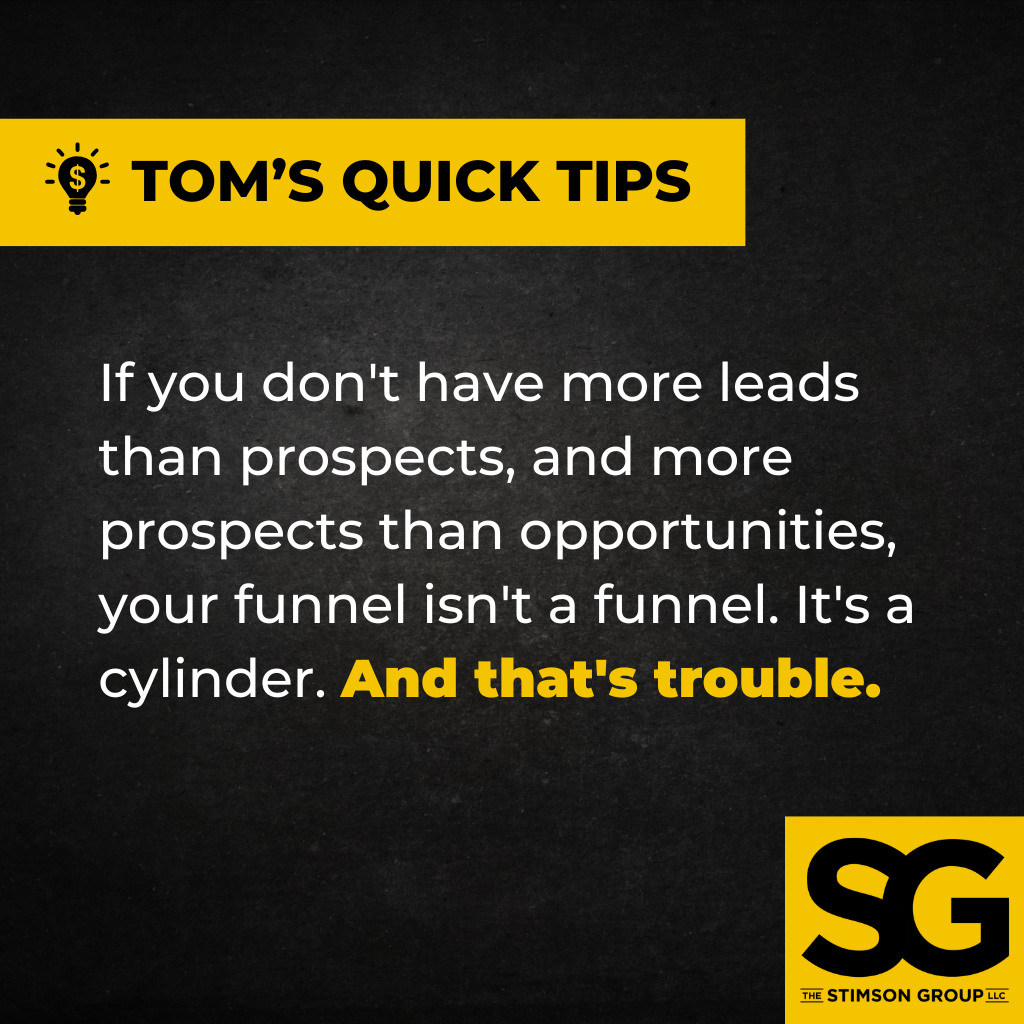
If you don’t have more leads than prospects, and more prospects than opportunities, your funnel isn’t a funnel. It’s a cylinder. And that’s trouble.
I’m not looking at the shape of your pipeline. I’m looking at the movement. How are you moving opportunities forward? How are you converting prospects into opportunities? How are leads becoming prospects?
If the answer is luck, answering the phone, or being in the right place at the right time, and there’s no intentional effort around marketing and business development, that’s a leading indicator of trouble when the economy softens.
Companies with a functioning sales funnel will still lose some business in a downturn. The funnel shrinks. But you’ll still capture a percentage of what’s available.
A soft economy hits companies without a pipeline much harder.
2. Your Forecast
Your forecast is different from your pipeline. It comes from the business you’re quoting, the business you know you’ll get, the recurring work you can count on, and the pickup business you expect in a given month. That last category is the B2B fill-ins, the “oh, by the way” work that typically runs three to five percent of revenue.
If you’re constantly updating your forecast, that tells me two things. One, you’re doing the right work on your business. Two, you’ll be able to spot trends before they become emergencies.
Many forecasters don’t always identify trends on their own. That’s okay. The point is having the data to examine.
3. Your Overhead Position
When I’m analyzing a client’s overhead expenses, I’m looking for a break-even number. How much revenue does it take to generate enough gross profit to cover your fixed costs?
That break-even number matters for any period: a year, month, or quarter. If you don’t know yours, you can’t make informed decisions about pricing, hiring, or capacity.
Your funnel, your forecast, and your overhead position tell me a lot about how well you’ll handle whatever comes next, whether it’s a surge of new opportunities or a sudden loss of them.
Read the Economy Through Your Clients
The second category of insight comes from outside your business. Understand what’s happening in your clients’ industries, too.
Pay attention to client activity. If you work in pharma and approvals are stalling, you won’t see big product rollouts. That means fewer events.
If your clients are in an industry facing layoffs, nobody’s calling you about next quarter’s meeting until the dust settles.
Watch buyer behavior. Are clients calling early to get ahead on planning, or are they dragging their feet and still deciding whether to hold the event?
Are they asking more questions about cost? Are they reducing scope before you’ve even submitted a proposal?
Read your RFPs carefully. The standard questions are easy: decision criteria, timelines, and who’s making the call.
The real information lives between the lines: Headcount concerns for your team. Travel and trucking budget questions. Scope limitations you haven’t seen before.
These signals stand out if you look for them.
Track lead times. How far in advance are prospects talking to you? Longer lead times signal a potentially strong pipeline.
Shorter lead times don’t necessarily mean weak demand, but they change how aggressively you price and close.
Selling on price isn’t a bad strategy if you’re doing it intentionally. Are you making the margin you deserve? Are you covering overhead and generating profit?
Sometimes you get to make more profit. Sometimes you make enough. The key is knowing which situation you’re in.
The Hardest Window: You
The third category of insight is the most uncomfortable one. It’s you.
What’s your outlook right now? Are you optimistic to a fault? Pessimistic to a fault? Or are you expecting the year to work out the way it always has?
“We’ll pick it up. We’ll find the extra revenue.” If you’re saying that without data to back it up, you’ve got blinders on.
Blinders show up in specific ways. If one customer accounts for 50% of your business and that doesn’t concern you, that client is a blind spot. If you’re overly stoic and believe none of this matters because you can’t control it, address that problem.
The antidote is an active response. Are you seeing what’s happening in your business and making decisions? Are you countering threats, capitalizing on strengths, and asking yourself how to make each situation better?
The best business owners I work with collect data and act on it. They challenge their own assumptions and invite others to do the same.
Get Outside Your Bubble
One of the most effective ways to sharpen your business instincts is to get outside your own perspective.
When my Intentional Success Club members meet to discuss forecasts, other owners and principals challenge each other’s assumptions. They cut back on the hopium. They remove blinders.
They help each other see opportunities hiding in plain sight.
When policy changes affect one industry sector, one member’s experience provides the whole group with insight into how economic shifts trickle down. When one member develops a strong system for forecasting and applying probability to jobs, everyone else gets better at it, too.
Getting outside of your individual bubble, where you have a group of peers who look at you as honestly as you look at them, is how everyone improves.


Leave a Reply