


Developing a strong strategy begins by understanding what you’re already doing.
With strategic questions, there are no wrong answers. There are just answers that guide us towards developing a strategy that works.
So, think about how you handle new business opportunities as you answer these two questions:
- Am I customer-focused or product-focused?
- Do I have a strong brand or a weak brand?
Knowing these answers helps you create a strategy that overcomes your weaknesses and maximizes your strengths.
Where’s Your Focus?
When considering a new opportunity, which matters more to you — how it will affect your internal business or how it will affect your customers?
Let’s say someone comes to you with an offer: “We want you to carry this line of exclusive LED products” or “We’d like you to be the sole provider of this major installation project.”
What matters most in your decision?
Do you consider what you’ll have to change internally to make it work? Do you focus on how it affects product production and your organizational structure? If so, that’s helpful information. You’re product-focused.
Or do you consider the benefits or problems this could create for your customers? Maybe you think, “My customers wouldn’t like that” or “This would interfere with other things that I’m doing for my customers.” If you automatically start thinking about your customers, that grants us different insight — you’re customer-focused.
What was the first thing you thought of?
Gauging your first response helps us make a quick assessment about your focus. Now, we can determine the degree to which you feel that way. Maybe you’re extremely product-focused and rarely think about the effect on customers. Maybe you think only slightly more about the customer than you think about internal process— or vice versa.
Neither is wrong or right, but knowing where you stand will help guide your strategy.
How Strong Is Your Brand?
Evaluating the strength of your brand is equally important. Consider your onboarding process for new customers, suppliers, or employees. When new people join your team, do you have to educate them about your company or do they come with expectations based on what they already know about you?
Your answer lets us know how strong your brand is. If you have to inform people about who you are, your brand is probably a little weak. Ninety percent of the people I talk to believe their brand is weak. Only a few really think their brand is strong… and sometimes they’re right.
Ultimately, your brand should precede you. If your brand is strong, people come in with impressions and expectations you can then improve upon. If it’s weak, you know that part of your strategy needs to focus on building brand recognition. Self-awareness is vital.
The Opportunity Quadrant
Knowing where you focus and the strength of your brand narrows the playing field. It shows us where opportunity lies. Only once we know whether you focus more on products or customers and if people recognize your brand can we determine what kind of strategic opportunity awaits you.
The Opportunity Quadrant tells us where we need to focus as we develop a strong strategy.
Where is your business in the quadrant?
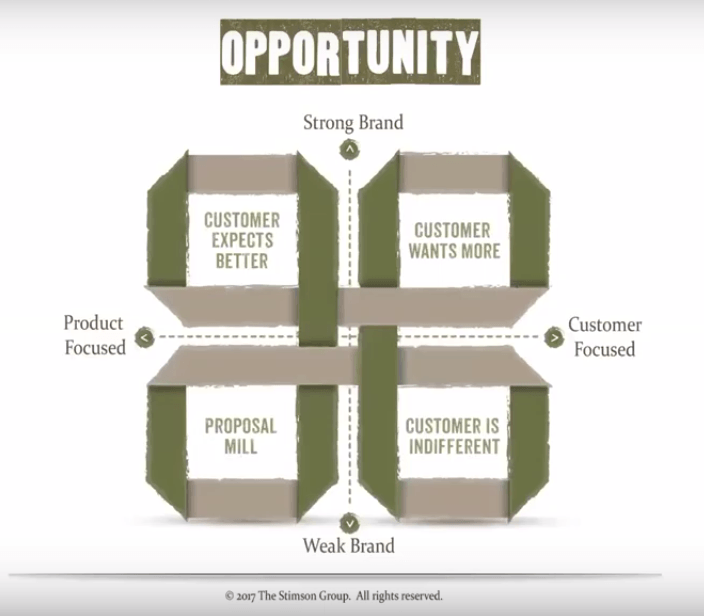
Let’s look at the worst-case scenario: If your brand is really weak and you’re product-focused, you’re a proposal mill. You’re spending all your time writing quotes. Everything’s undifferentiated and transactional — and it’s really frustrating.
But there are varying degrees of this — you likely aren’t totally product-focused and you have some degree of brand established.
Still, if you’re in this quadrant, the first step in developing your strategy is helping you become better at being a company that produces a lot of proposals. We can create a strategy that will make you more effective where you are. Meanwhile, you can begin to work on increasing your focus on customers and building your brand.
Let’s move to a different quadrant. If you have a strong brand but you’re product-driven, you may have a problem of customers having really high (and maybe unreasonable) expectations. Your strategy needs to focus on delivery because that’s where you have potential strength.
It’s time to get honest:
- Where is your focus?
- How strong is your brand?
Once you know, you’re ready to develop a strong strategy that taps into your true potential.


Leave a Reply