




Listen instead on your Monday Morning Drive:
When I was a stagehand in college, our crew loaded in national touring acts faster than crews at professional venues. We weren’t more experienced than those professional stagehands. We weren’t stronger. We just followed five simple rules that most crews ignore.
The touring roadies loved us. Load-ins scheduled for eight hours finished in six. Those roadies got time to shower, nap, or grab a meal before the show. That saved time was priceless to people who lived on the road.
What made the difference wasn’t skill. It was discipline.
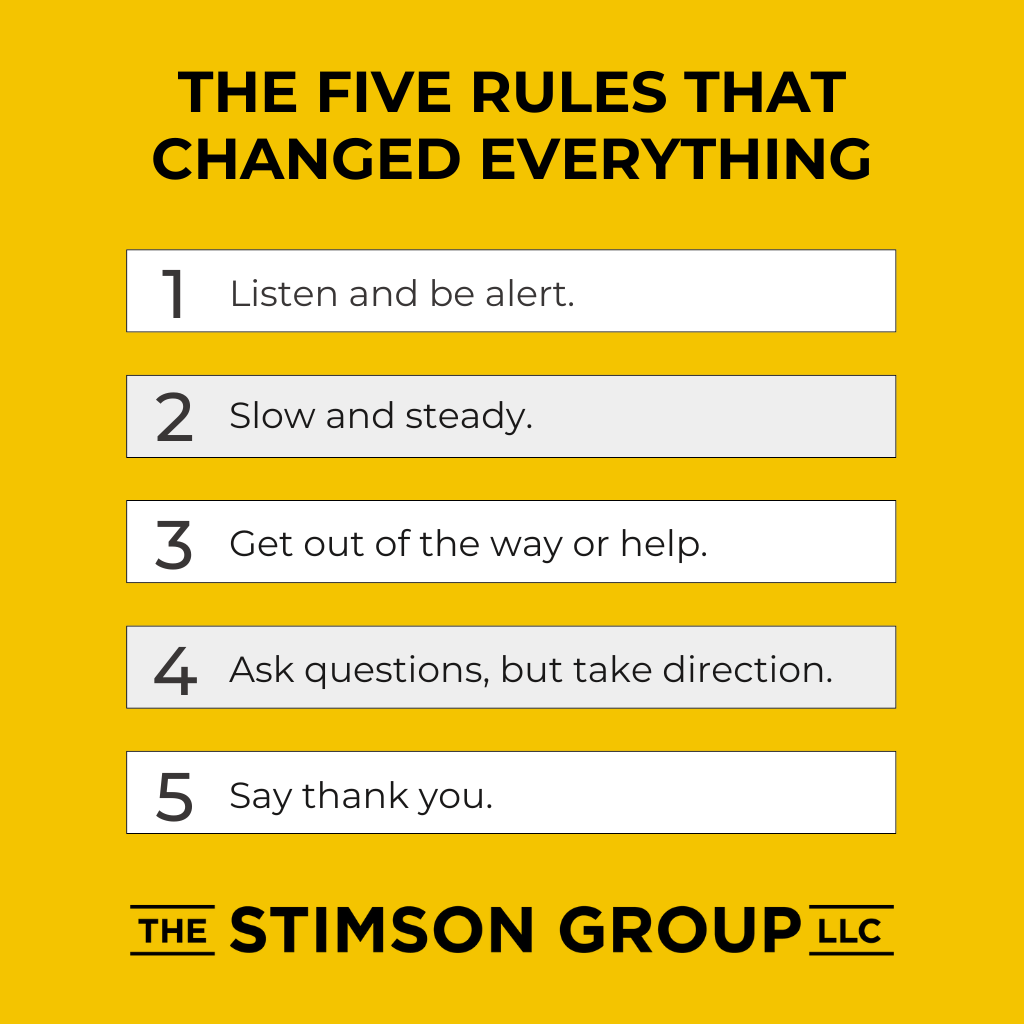
The Five Rules That Changed Everything
Our training was simple because it had to be. College students have terrible attention spans.
The house staff told us upfront, “You don’t know how to do this work. The traveling crew does. They’re going to direct you. Your job is to listen and execute.”
Rule 1: Listen and be alert. We didn’t have cell phones to distract us back then, but we still tended to chat and wander off. The instruction was clear: Be ready. A crew member will grab you, tap your elbow, and point you in a direction. Stay ready so you don’t miss the cue.
Rule 2: Slow and steady. Don’t try to impress anyone by pushing a road case faster or working too quickly. Slow is not lethargic. Slow is careful and precise. Steady means you keep moving. Push this case where it needs to go, then go back for the next one.
Rule 3: Get out of the way or help. If you’re standing around waiting and nobody’s telling you what to do, move. You’re in the way. When they need you, they’ll ask.
Rule 4: Ask questions, but take direction. You can clarify and confirm. Once you understand, execute without debate.
Rule 5: Say thank you. This rule confused people, but it was the most important.
On Rule 5: Why “Thank You” Beats “No Problem”
In theatre, “thank you” acknowledges an instruction. For example:
“Take that trunk downstage left.”
“Thank you.”
That exchange was complete. I understood the instruction, I was doing it, and I was already moving on.
Compare that to what you hear today: “No problem.” “I got it, boss.” “I’ll take care of it.”
Those phrases don’t translate everywhere. They don’t carry the same meaning for every person on the crew. They’re vague. Did you understand? Are you actually doing it now? The answer is unclear.
“Thank you” is unambiguous. It says, “Message received; action in progress.”
We used the same principle for safety calls. A crew member would yell, “Pipe coming in,” and everyone on stage would respond, “Thank you.”
If the caller didn’t hear enough voices for the number of people nearby, they’d call it again, and again, and again. They repeated until every single person acknowledged. Lives depended on it.
When everyone responds differently, it sounds like noise. When everyone says, “Thank you,” it sounds like a crew.
Flip the Script: When You’re Running the Crew
Now put yourself on the other side. You’re the professional walking into a venue with eight unknown stagehands assembled from a local supplier or house crew. What helps them help you?
Be organized, not urgent. Urgency is a failure of planning. Leave it at home. There’s no room for it on a show site.
Be mindful, but decisive. Let’s say the soffit is two feet lower than expected. You need to make adjustments. Let the team know you’re sorting it out, give them a task to complete in the meantime, then make a decision in two minutes and move on. You don’t have time to litigate the entire design of the show.
Pause, think ahead, then move. Before you give the next instruction, look around. What’s about to happen? What needs to move before the next step can proceed? Now you know what direction to give.
Overcommunicate, but be brief. For example, “We have a pipe coming in. Need everyone clear of this wall. Any questions? Let’s go.”
That communication expedites every task.
Discipline Beats Talent
The touring crews who came through our college venue told us we were one of the best local crews they’d ever worked with. That wasn’t because we were talented. We were students picking up gigs between classes.
We were good because we had discipline. We listened. We acknowledged clearly. We stayed out of the way until we were needed. We didn’t try to prove we knew more than the people directing us.
If you’re working around people who aren’t good at this, take note. They’re creating stress, communication breakdowns, and quality problems you’ll have to clean up.
You need to be as good as the crew you’re hoping to find when you show up. And when you’re managing the crew, you need to be the person who helps everyone do their best work.
Don’t be the person who shows off expertise. We’re all experts in one area or another. Unless a crew member asks, keep your expertise to yourself.


Leave a Reply