





Listen instead on your Monday Morning Drive:
We’ve all been there. You finally get on a call with a good prospect. You know they’re legit because they’ve obviously looked at your website, are citing some of your language, and have adapted their questions to match what you say you do.
Your brain switches into sales mode, and then things go wrong. You overshare. They feel rushed. Whatever goodwill was created by your awesome website just vaporized into a cloud of unrequited trust.
This person isn’t ready to buy. They’re ready to learn. They even took the time to prepare for the conversation. However, you’re already looking at the calendar, checking availability, and counting on the revenue.
You think you’re engaging with the buyer, but that’s not what this moment is about. Right now, you need to disconnect. Live in the moment, not the future. Certainly not the future you wrote in your head during the two to three nanoseconds it took you to see dollar signs.
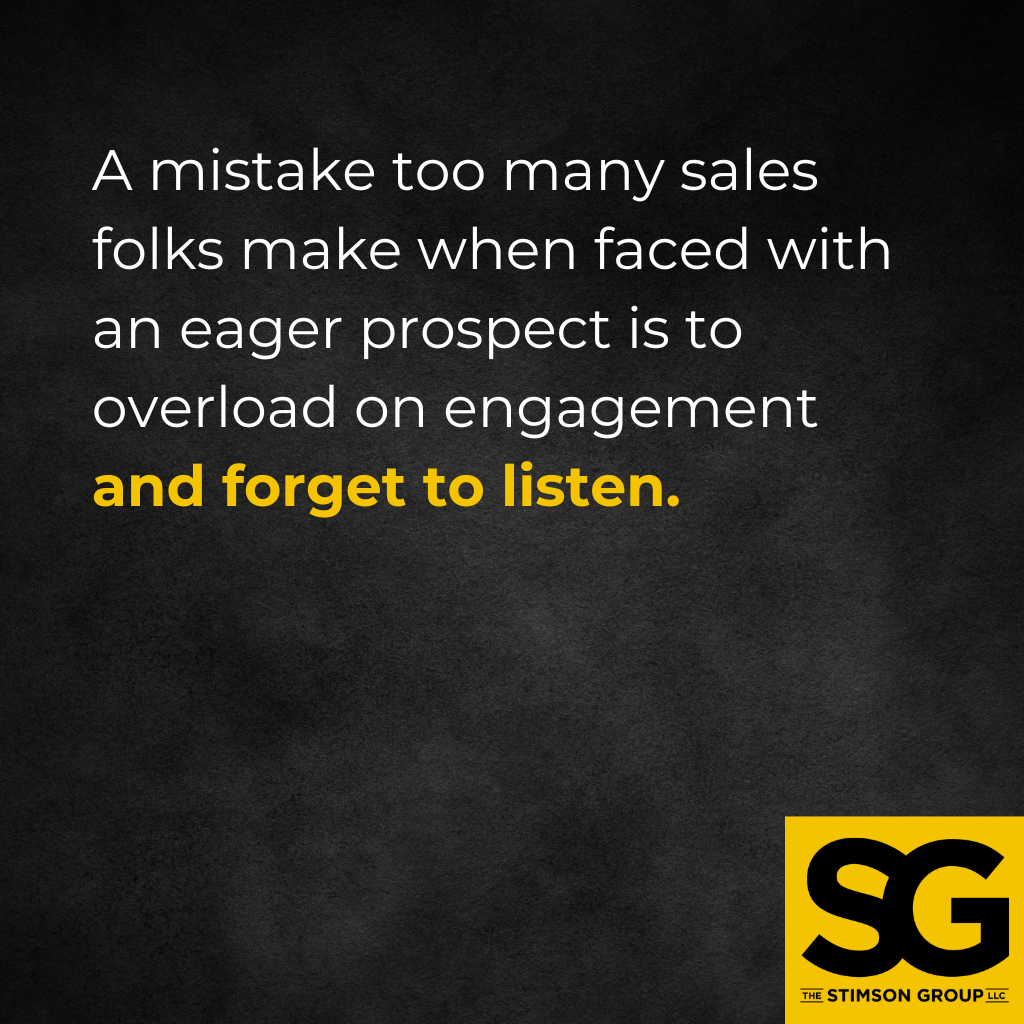
A mistake too many sales folks make when faced with an eager prospect is to overload on engagement and forget to listen. We become all, “Yes, we can do that! Let me tell you about the time I did something similar…” or, “When can we set up a site survey?”
Disconnect Now
There are three things you need to immediately set on pause in your brain when listening to a great opportunity.
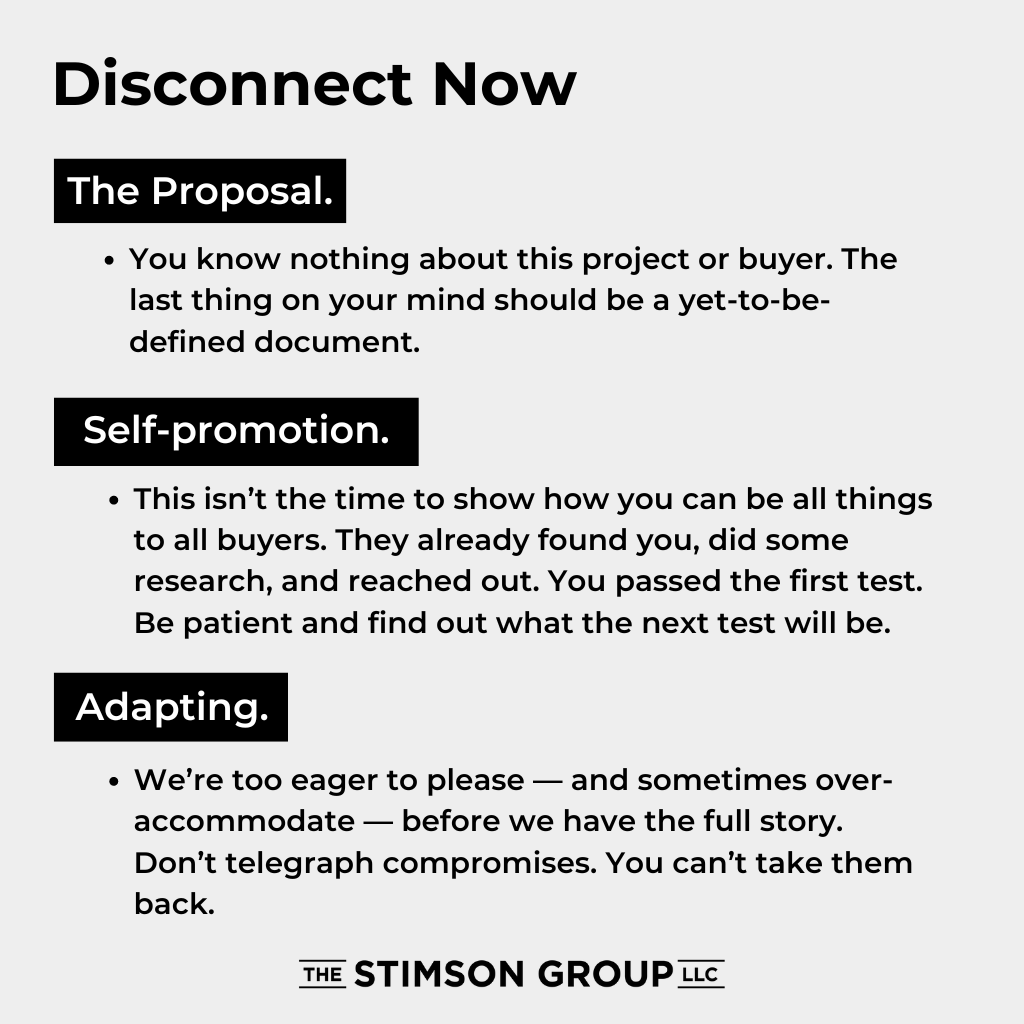
- The Proposal. You know nothing about this project or buyer. The last thing on your mind should be a yet-to-be-defined document.
- Self-promotion. This isn’t the time to show how you can be all things to all buyers. They already found you, did some research, and reached out. You passed the first test. Be patient and find out what the next test will be.
- Adapting. We’re too eager to please — and sometimes over-accommodate — before we have the full story. Don’t telegraph compromises. You can’t take them back.
Humans tend to be self-centered. The opposite is to be engaged.
Listen
I’m not breaking any new ground here, but just shut up. Ask open-ended questions.
- Tell me more about your event.
- Where are you in the process?
- How can I be of help for you today?
The above three questions will provide you with everything you need to know to draft a timely and helpful reply. You don’t need to address every response.
Reply in Context
If you’re accustomed to dealing with end-customers, you know they often have questions about the process of buying services from you. Let’s assume they need help defining a budget. What do you do? (No, you don’t write a proposal.)
You respond, “There are three ways to establish a budget for an event like yours.” You’re now the expert and are about to share some valuable insider information. How cool is that?
Using “threes” is a great technique to reframe conversations while leading up to other open-ended questions, such as, “Which of these sounds like what you need today?”
You can use the same technique for these great buyer questions:
- How do we determine our needs?
- How can we learn more about what you do?
- How do we avoid spending too much?
Workshop Your Responses
I know you want me to tell you what the “three ways” are for all those questions. This is something you need to think about for yourself. You know the answers, but you’re probably more concerned about whether those responses are correct.
The three techniques only need to be helpful, not definitive.
Okay, I’ll give you one set.
Three ways to define your event budget:
- Evaluate last year’s budget and add 10% if everything went well and 20% if you remember a lot of problems.
- Let me describe three tiers of solutions with budget ranges, and you can guide me from there.
- Hire a third-party expert to develop a comprehensive RFP, and ask companies like mine to bid on your project.
Then ask, “Which method resonates with you? Why?”
Remember, your goal isn’t to write a proposal. You have to first help the person on the other end of the conversation. When a proposal is the logical next step, you’ll both know.


Leave a Reply