


One of my clients is on the road to scalability. He’s working hard to anchor key managers to prepare for future jobs.
After a recent busy season, those key managers focused on projects that established internal, scalable processes. They stayed home from shows to help the rest of the team understand their roles in a scalable world.
The owner, on the other hand, was grateful for the sudden downtime because he wasn’t out doing a show. Since the show team wasn’t busy, the owner gave everybody in the company an extra week off.
The managers were devastated. They had plans in place, and the people they needed to help execute the plans were suddenly taking the week off. By the time everyone had taken their extra week, the management plan had lost an entire month.
It undermined the goals they were trying to achieve.
The owner saw downtime as an opportunity to recover from being busy. Meanwhile, his scalable management team was getting comfortable working at the same level of intensity year-round. They no longer experienced the lulls in show schedules the owner was used to.
Those managers were SOLVING the feeling of busy. And now, they felt dejected and unheard.
Getting everybody in an organization to adopt a scalability mindset won’t happen overnight. You have to show people how it manifests and why it’s important. The whole team, including the owner, needs to understand that downtime is not a luxury they have anymore.
Downtime indicates a failure in planning. There’s always work to do, and management’s job is to make sure it gets done.
The Old Mindset Is Not Scalable
The concept of downtime is unscalable. If the work you reserve for downtime was actually important, you wouldn’t be too busy to get it done. Downtime is a crutch for people who are artificially busy.
Having said that, we’re in a seasonal industry, and downtime does manifest. Nevertheless, we need to eliminate the concept of downtime.
If you have seven or eight busy months, you’ll have four or five months that aren’t as busy. The less-busy months aren’t an excuse to sit back and relax or say you’ll work on training.
During slower periods, employees will want to take time off, so you won’t complete projects reserved for downtime. Or, you’ll have a last-minute show, and downtime will dissolve.
Sometimes, we don’t want to do the things we should be doing during downtime because they cost money. That means you have to spend money in a month you’re not making a lot of it, which causes resistance.
The fact of the matter is that we don’t like downtime. We take every opportunity to talk ourselves into being too busy to do downtime projects.
No More Downtime
Scalable organizations don’t have downtime. They may be seasonal, but that doesn’t mean they’re not busy all the time.
The traditional concept of being “busy” implies you’re working beyond your capacity. It’s a negative concept you need to eliminate
Positive “busy” simply means you know what you’ll do when you come to work every day. I tend to be busy because, when I finish the day, I already know what I’ll do when I come in the next morning.
As an organization, you need to be busy that way too. You need to know what you’ll do in any given week. Sometimes, you’re focused on doing shows, but only part of your scalable team is focused on the shows. The other part is busy planning and selling future events.
Just because your show team has a few days or weeks off doesn’t mean the rest of your organization isn’t busy. They’re always busy — or they should be.
Scalable companies are never too busy. They plan, prepare, and allocate their resources to eliminate downtime.
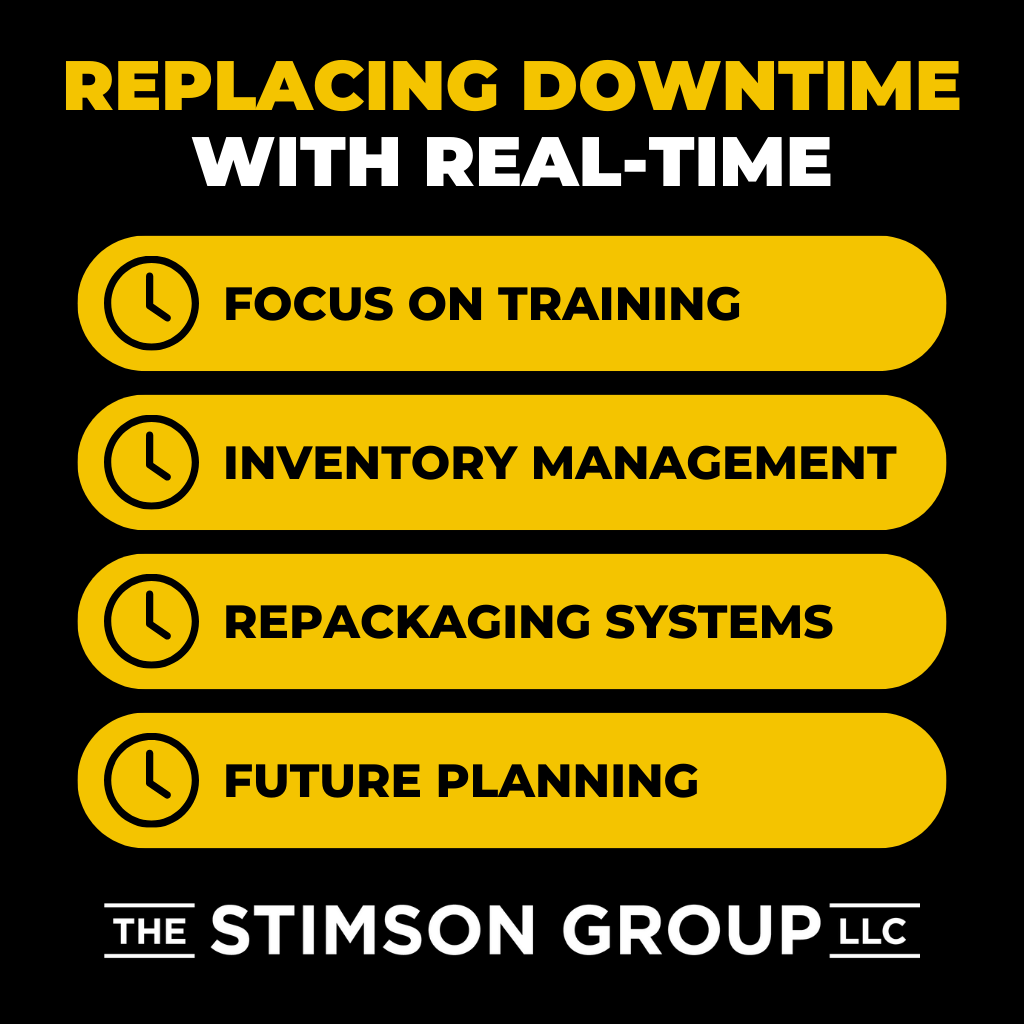
Replacing Downtime With Real-Time
There are several ways to escape the old mindset of downtime and adopt the scalable philosophy of real-time:
Focus on Training
Instead of allocating training to downtime, train staff, freelancers, and even clients on their own time.
How? Use the scalable approach. Instead of waiting for off days, create online, on-demand solutions that enable people to train whenever they have the time to do it.
Inventory Management
Reviewing, restocking, and organizing inventory used to be done during downtime. In the scalable approach, managing inventory becomes part of normal warehouse operations.
Repackaging Systems
Modernizing, upgrading, and improving systems for efficiency are all tasks often reserved for downtime.
In the scalable model, this happens in real-time. When you get feedback from the field that a package needs to be worked differently, there’s always someone in the office who can do it.
Future Planning
In the old mindset, strategizing for the future and working on business development were pushed to downtime.
The scalable approach includes regularly scheduled meetings (not scheduled around shows or only in downtime). The team members who need to attend are always available because they’re not running around doing shows all the time.
The heads of sales, planning, administration, and finance should discuss future operations with the owner and the general manager on a regular basis.
Conclusion
In a scalable business, you don’t have to schedule projects around shows or wait for downtime. The old downtime projects are now part of the normal course of business.
With a scalable management team and a scalable crew, there is no downtime.


Leave a Reply