


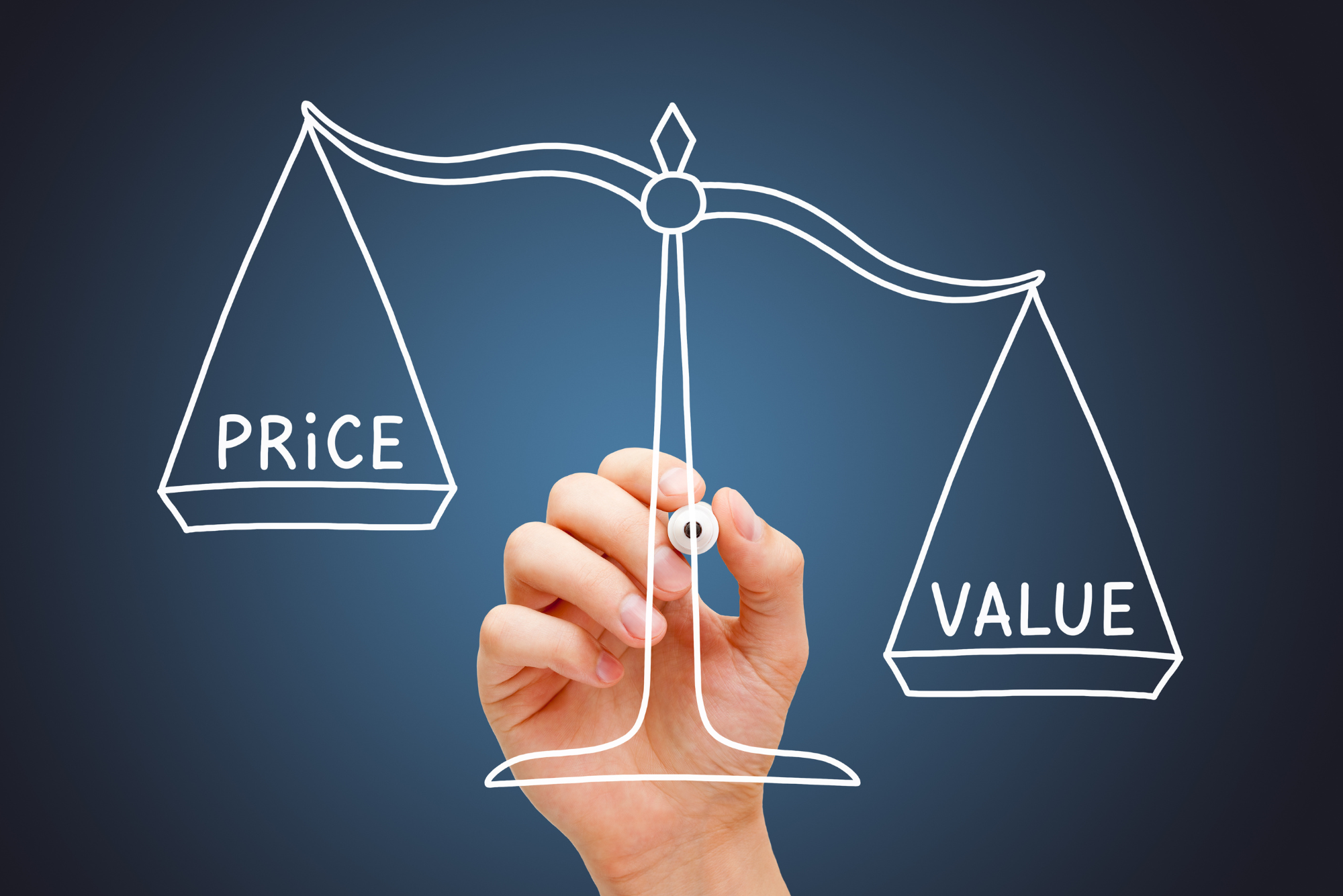


Have you ever bought something and felt like you got a good deal, then met someone who got an even better deal?
Maybe you got a killer deal on a car, then realize your friend got an even better price for the same make and model. We’ve all been there one way or another.
But what defines a good deal? If you say it’s pricing, you’re not alone. Most people equate “deal” with pricing.
But there’s more to it than that.
We all want the best deal. This want is rooted in the fear of making a mistake during the buying process, and that fear is what makes some customers focus on price alone. What kind of mistakes are your customers afraid of?
Am I overpaying?
Am I paying for something that doesn’t meet my needs?
Am I spending too much time going through the process to get to the end product?
Am I buying from the wrong person or company?
Is this process costing me too much energy?
Most customers are afraid to make mistakes like these. How do you overcome those fears to close the deal?
Value Is More Than Price
That fear of making a mistake compels people to seek out the “best deals,” but they do it based on price alone.
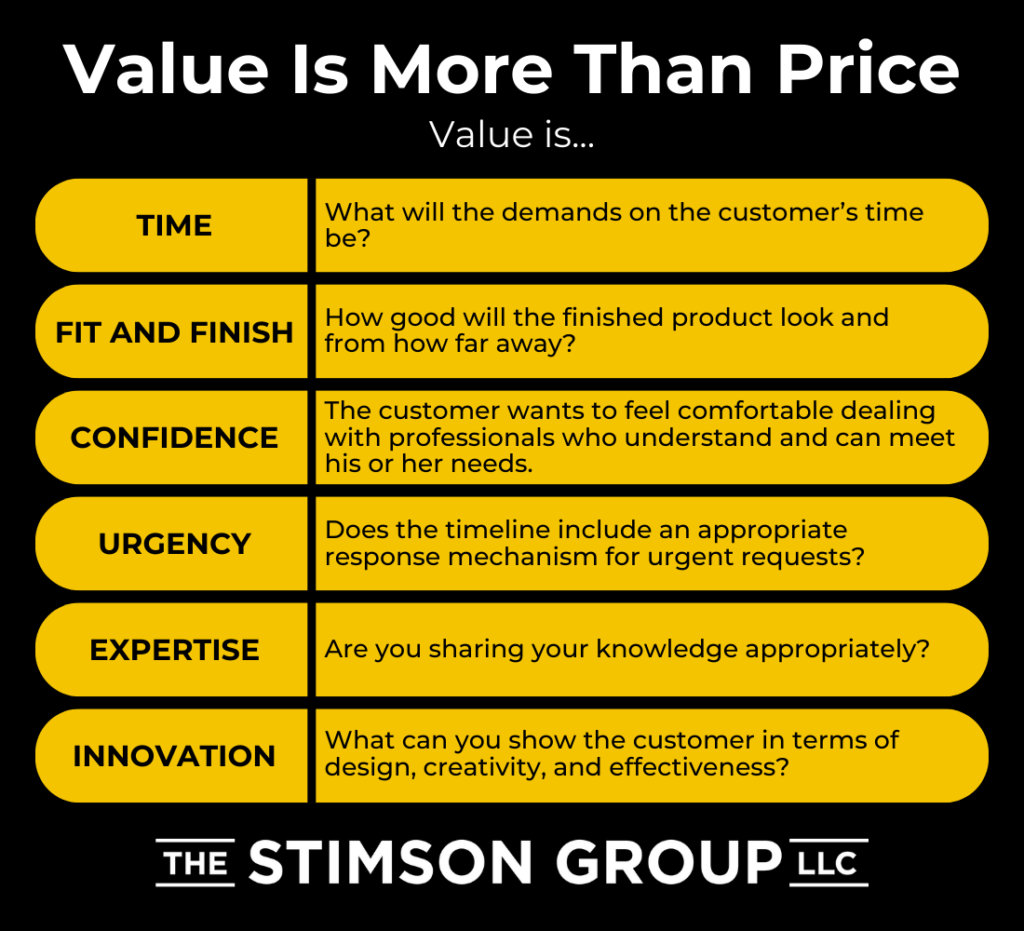
The truth is, there’s more to value than price, including:
- Time: What will the demands on the customer’s time be?
- Fit and Finish: How good will the finished product look and from how far away?
- Confidence: The customer wants to feel comfortable dealing with professionals who understand and can meet his or her needs.
- Urgency: Does the timeline include an appropriate response mechanism for urgent requests?
- Expertise: Are you sharing your knowledge appropriately?
- Innovation: What can you show the customer in terms of design, creativity, and effectiveness?
To communicate these value factors, you need a discovery process. The discovery process includes all the steps you need to take to arrive at a deal, but doesn’t tell you how much time to spend on each step.
Figuring this out is an art. It takes skill, intuition, and experience to know how much time to spend on each step of the discovery process — and that all starts with understanding where the customer is coming from.
For instance, if the customer is talking about an event two years away, time is not their biggest concern. You can gauge urgency in a matter of seconds. Either nothing is urgent, or everything is urgent.
Take all those bits of information and weave them together. That’s where value is going to be created for a particular buyer.
Navigating the Discovery Process
As you uncover value during the discovery process, you also uncover the customer’s core fears.
The fear of making a mistake is emotional. You need to address the reasons behind the fear and move the customer to a less emotional state so they can make the right decision.
Many salespeople swear that if you can win the customer’s trust — I’m talking about true trust, not qualified trust or business trust — things like effort, time, and money will be much easier to discuss.
If the customer doesn’t trust you, they’ll constantly question and re-litigate the decision through the entire buying process. The lack of trust rents space in their head, and it gets in the way of getting the deal done.
The greatest feeling that needs to be addressed, then, is trust.
Once trust is gained, you can address the customer’s fears by showing them that they’re getting a fair price, a solid return on their investment, and spending an appropriate amount of time and energy to get to the end product. Remind them that the process you’ve walked them through is getting them a good deal on their terms.
This amounts to you asking a series of questions:
“Is this going to give you the result you need with the energy you expected to invest?”
“Does the time you’re going to be required to work with me on this project align with your expectations?”
“Do the results you’re going to get correspond with the money you’re spending?”
Questions like these reframe the conversation so you can be sure all the customer’s needs and fears have been addressed. Then, you come to the last question:
“It sounds like we’re going to do business together. Is that correct?”
The customer is no longer afraid to say, “Yes.” Now, they know they’re getting a good deal.


Leave a Reply